Mortgage Lender Qualifications: What You Need to Know Before Applying
Securing a mortgage is a foundational step for many American home buyers, but understanding what lenders look for can feel like navigating a complex maze. Whether you are a first-time buyer, looking to refinance, or a veteran seeking to use your VA benefits, meeting lender qualifications is essential for approval. Lenders assess your financial health to determine your ability to repay a loan, ensuring both their investment and your long-term success as a homeowner.
This guide provides a clear, in-depth look at the key qualifications you will encounter. By understanding these requirements upfront, you can better prepare your finances and increase your chances of a smooth application process. While this information is designed to educate, remember that I am an expert researcher and educator, not a licensed financial advisor or mortgage broker. MortgageTune.com offers expert guides and tools, but always consult with a qualified mortgage professional for personalized advice tailored to your specific situation.
The Core Pillars of Mortgage Qualification
Mortgage lenders evaluate several critical aspects of your financial life to determine your eligibility and the terms of your loan. These core pillars provide a holistic view of your creditworthiness and repayment capacity.
Your Credit Score: The Foundation of Trust
Your credit score is a three-digit number that summarizes your credit risk to lenders. The most commonly used score is the FICO (Fair Isaac Corporation) score, which ranges from 300 to 850. A higher score indicates a lower risk, often translating to better interest rates and more favorable loan terms.
For conventional loans (mortgages not insured or guaranteed by a government agency), most lenders look for a minimum FICO score around 620. However, to qualify for the most competitive rates and terms in 2026, a score of 740 or higher is generally preferred.
For FHA loans (Federal Housing Administration insured loans), the requirements are more flexible. You might qualify with a FICO score as low as 580 for a 3.5% down payment. Some lenders may even accept scores down to 500, but this would typically require a larger down payment, often 10% or more. Veterans exploring VA loans (Department of Veterans Affairs guaranteed loans) often find lenders are more flexible on credit scores, though many still prefer a minimum of 620 for smoother processing, despite the VA not setting a specific minimum.
A detailed credit report shows not just your score, but your payment history, types of credit used, amounts owed, and length of credit history. Lenders scrutinize this to identify any late payments, bankruptcies, foreclosures, or other derogatory marks that could signal risk. Regularly checking your credit report and working to improve your score can significantly impact your mortgage options. Our loan eligibility checker can give you an initial idea of where you stand.

Debt-to-Income (DTI) Ratio: Balancing Your Finances
Your debt-to-income (DTI) ratio is a crucial metric that illustrates how much of your gross monthly income goes towards debt payments. Lenders use DTI to ensure you can comfortably manage your new mortgage payment alongside your existing financial obligations. There are two types of DTI:
1. Front-End DTI (Housing Ratio): This calculates the percentage of your gross monthly income that would go towards your new housing expenses, including principal, interest, property taxes, and homeowner’s insurance (PITI). For example, if your PITI is $2,000 and your gross monthly income is $6,000, your front-end DTI is 33.3%.
2. Back-End DTI (Total DTI): This is a more comprehensive calculation. It includes your proposed PITI payment plus all other recurring monthly debt payments, such as credit card minimums, car loans, student loans, and personal loans, divided by your gross monthly income. Most conventional lenders prefer a back-end DTI of 36% or lower, but many will go up to 43% or even 50% with strong compensating factors like a large down payment or significant cash reserves. FHA loans, for instance, can often accommodate a total DTI up to 50-55% in some cases.
To calculate your DTI accurately, you will need to list all your monthly debts and your gross income. Our DTI calculator can help you quickly determine this critical figure. Understanding and managing your DTI is paramount; lowering high-interest debt before applying can improve your chances.
Stable Income and Employment History: Proving Repayment Ability
Lenders need assurance that you have a consistent and reliable income source to make your mortgage payments. The general guideline is typically a two-year history of stable employment in the same line of work or industry.
- W-2 Employees: If you work for an employer and receive W-2 forms, lenders will typically ask for your last two years of W-2s and recent pay stubs (e.g., the last 30 days). They verify your employment by contacting your employer.
- Self-Employed Borrowers: For individuals who are self-employed, own a business, or work as independent contractors, the verification process is more involved. Lenders usually require two years of federal tax returns (including Schedule C or SE), and sometimes profit and loss statements. They will typically average your net income over these two years, looking for stability or growth. It is important to work with lenders who understand the nuances of self-employment, some of which may be found among Private Lenders.
- Gig Economy and Other Income Sources: Income from sources like commissions, bonuses, overtime, or rental properties often requires a two-year history to be counted towards qualification. For example, if you receive substantial bonuses, lenders want to see that pattern consistently over two years. Social Security, disability, or pension income also typically requires documentation showing its regularity and duration.
Any significant gaps in employment or frequent job changes within the last two years might raise questions. If you have such a history, be prepared to explain it in detail, as lenders look for a predictable income stream.
Down Payment and Reserves: Your Financial Commitment
The down payment is the portion of the home’s purchase price that you pay upfront, reducing the amount you need to borrow. It is a direct indicator of your financial commitment and can significantly influence your loan terms and overall cost.
- Conventional Loans: Down payments can range from as low as 3% for certain first-time buyer programs (like Fannie Mae’s HomeReady or Freddie Mac’s Home Possible) up to 20% or more. A 20% down payment helps you avoid Private Mortgage Insurance (PMI), an additional monthly cost.
- FHA Loans: Typically require a minimum of 3.5% down, making them popular for borrowers with less saved.
- VA and USDA Loans: For eligible borrowers, these programs offer the significant advantage of 0% down payment options.
- Jumbo Loans: For loan amounts exceeding the conforming loan limits (which are projected to be in the low $800,000s for a single-family home in most areas in 2026, though higher in high-cost regions), down payment requirements are usually higher, often 10-20% or more.
In addition to the down payment, lenders often require you to have cash reserves. These are funds held in your bank account after the down payment and closing costs have been paid. Reserves typically represent a certain number of months of your PITI payment (e.g., two to six months), proving you have a financial cushion in case of unexpected expenses or income disruptions.
Assets: Showing Your Financial Strength
Lenders will scrutinize your assets to confirm you have enough funds for the down payment, closing costs, and any required reserves. This involves reviewing your bank statements and other financial accounts.
- Bank Statements: Typically, you will need to provide statements for the past 60 days for all checking and savings accounts. Lenders look for sufficient funds and “seasoning,” meaning the funds have been in your account for at least two months. Large, unidentifiable deposits during this period can raise red flags, as lenders need to ensure funds are not from undisclosed loans or questionable sources.
- Investment Accounts: Statements from retirement accounts (401k, IRA) or brokerage accounts can demonstrate additional assets, even if you do not plan to use them for the purchase.
- Gift Funds: If a portion of your down payment or closing costs comes from a gift, lenders require a gift letter from the donor stating that the money is indeed a gift and not a loan. Specific rules apply to gift funds, including who can provide them and how they are documented, varying by loan program.
Having a robust asset base not only ensures you can close the loan but also provides a layer of security, making you a more attractive borrower.
Beyond the Basics: Specific Loan Programs and Lender Preferences
While the core pillars apply broadly, different loan programs have unique guidelines and lenders may have their own overlays (additional requirements beyond the basic program rules).
Conventional Loan Qualifications
Conventional loans are the most common type of mortgage and are not insured or guaranteed by the government. They conform to the guidelines set by Fannie Mae and Freddie Mac.
- Credit Score: Generally requires a FICO score of 620 or higher, with better rates for 740+.
- DTI Ratio: Typically prefers DTI ratios below 36%, though it can go up to 45-50% with strong compensating factors.
- Down Payment: Minimum of 3% for some first-time buyer programs; 5% for others. 20% to avoid PMI.
- Loan Limits: Subject to conforming loan limits, which vary by county. For 2026, the baseline limit for a single-family home is projected to be in the low $800,000s for most of the U.S., higher in designated high-cost areas.
- Mortgage Insurance: If your down payment is less than 20%, you will typically pay PMI (Private Mortgage Insurance).
FHA Loan Qualifications
FHA loans are insured by the Federal Housing Administration, making them a popular choice for borrowers with lower credit scores or smaller down payments. Our FHA Loans Guide offers more details on specific lenders.
- Credit Score: Can be as low as 580 with a 3.5% down payment, or 500 with a 10% down payment.
- DTI Ratio: Generally more flexible, often allowing DTI ratios up to 50-55% with sufficient residual income.
- Down Payment: A minimum of 3.5% is required for borrowers with a FICO score of 580 or above.
- Mortgage Insurance: All FHA loans require both an upfront Mortgage Insurance Premium (MIP) and annual MIP, which is paid monthly. This remains for the life of the loan if your down payment is less than 10%.
- Property Requirements: The property must meet FHA minimum property standards, ensuring it is safe, sound, and secure.
VA Loan Qualifications
VA loans are a significant benefit for eligible active-duty service members, veterans, and surviving spouses. These loans are guaranteed by the Department of Veterans Affairs.
- Eligibility: Requires a Certificate of Eligibility (COE) from the VA.
- Credit Score: While the VA does not set a minimum, most lenders prefer a FICO score of at least 620 to manage their risk.
- DTI Ratio: VA guidelines are often very flexible regarding DTI, focusing more on residual income (the amount of discretionary income left after all major expenses are paid).
- Down Payment: One of the most attractive features is 0% down payment for eligible borrowers.
- Funding Fee: Most VA loans require a VA funding fee, which can be financed into the loan, but this fee can be waived for veterans with service-connected disabilities.
USDA Loan Qualifications
USDA loans are designed to promote homeownership in eligible rural and suburban areas. These loans are guaranteed by the U.S. Department of Agriculture.
- Location: The property must be in a designated rural area as defined by the USDA.
- Income Limits: Borrowers must meet specific income limits, which vary by location and family size.
- Credit Score: While the USDA does not specify a minimum, lenders typically look for a FICO score of 640 or higher for streamlined processing. Lower scores may be accepted with manual underwriting.
- Down Payment: Offers 0% down payment options for eligible borrowers.
- Mortgage Insurance: Requires both an upfront guarantee fee and an annual fee.
Non-QM Loans and Private Lenders
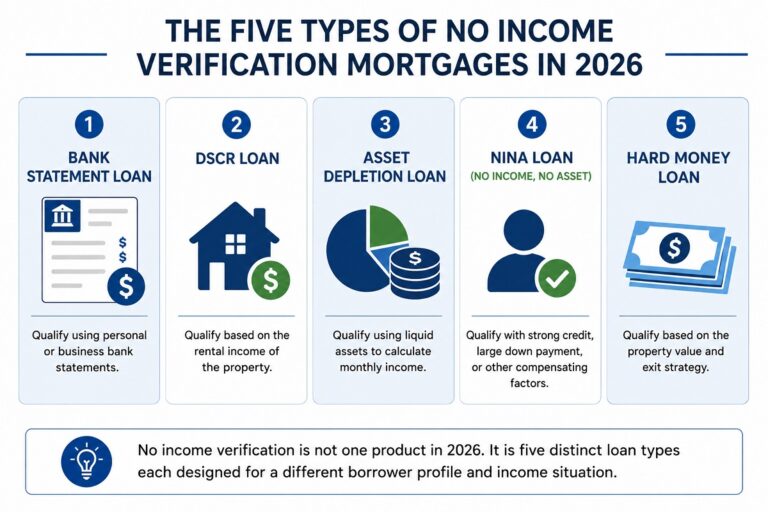
For borrowers who do not fit the traditional mold (e.g., self-employed with complex income, recent credit challenges, or higher DTI), Non-Qualified Mortgage (Non-QM) loans offer alternatives. These loans are not required to meet federal Qualified Mortgage (QM) standards, providing lenders more flexibility.
- Lender Types: These loans are typically offered by Private Lenders or specialized mortgage companies, rather than large traditional banks.
- Flexible Underwriting: Non-QM loans might use alternative income verification methods like bank statements for self-employed individuals (instead of tax returns) or allow higher DTI ratios.
- Interest Rates and Fees: Due to the increased risk, Non-QM loans often come with higher interest rates and fees compared to conventional loans.
If you have unique circumstances, exploring options with Private Lenders could be beneficial.

Preparing for Your Application: The Practical Steps
The application process can be streamlined with proper preparation. Knowing what to expect and having your documents ready can save you time and stress.
Gather Your Documents
Before you even speak to a lender, start compiling essential documents. This proactive step ensures you are ready to provide everything quickly when requested. Typical documents include:
- Personal Identification: Driver’s license, Social Security card.
- Income Verification: Two years of W-2s, 1099s, and federal tax returns. If self-employed, two years of full business and personal tax returns. Your most recent pay stubs (typically 30 days).
- Asset Verification: Bank statements for the past 60 days for all checking, savings, and investment accounts.
- Debt Information: Statements for all credit cards, student loans, car loans, and any other installment debts.
- Housing History: Proof of rent payments for the last 12-24 months if you are currently renting.
- Other: Divorce decrees (if applicable), bankruptcy discharge papers (if applicable), gift letters (if receiving gift funds for down payment).
Understand Pre-Qualification vs. Pre-Approval
These terms are often used interchangeably but have distinct meanings in the mortgage process.
- Pre-Qualification: This is an informal estimate of how much you might be able to borrow. It is based on a brief discussion of your financial situation and self-reported information, often without a credit check. A pre-qualification is a good starting point to gauge your general affordability but holds little weight with sellers.
- Pre-Approval: This is a much more thorough assessment. A lender pulls your credit report, verifies your income and assets, and essentially underwrites a preliminary loan. A pre-approval letter states the exact loan amount you qualify for, based on verified information, and indicates the type of loan. Sellers take pre-approval letters much more seriously, as they demonstrate you are a serious and qualified buyer. We strongly recommend getting a pre-approval before seriously looking at homes. Our affordability calculator can help you understand what you can realistically afford.
Shop Around for the Best Rates
Do not settle for the first lender you speak with. Mortgage rates, fees, and programs can vary significantly between lenders. Shopping around is one of the most impactful things you can do to save money over the life of your loan.
Contact at least three to five different lenders to compare offers. This could include traditional banks, credit unions, and online lenders. When comparing, look beyond just the interest rate. Consider:
- Interest Rate: The core cost of borrowing.
- APR (Annual Percentage Rate): This reflects the total cost of the loan, including interest and most fees, giving you a more accurate comparison.
- Lender Fees: Origination fees, processing fees, underwriting fees, etc.
- Closing Costs: The total expenses due at closing, which can vary.
- Customer Service: How responsive and helpful the loan officer is.
You can use our rate comparison tool to explore different offers. Remember, applying with multiple lenders within a short window (typically 14-45 days, depending on the credit scoring model) counts as a single inquiry on your credit report, minimizing the impact on your score. For those seeking quick approvals, our guide on Fastest Lenders in 2025 might be useful.
Common Qualification Hurdles and How to Address Them
Many aspiring homeowners encounter challenges during the qualification process. Understanding these common hurdles and having strategies to address them can help you overcome obstacles.
Low Credit Score
A low credit score (below 620 for conventional, below 580 for FHA) is a common barrier.
- Strategy: Focus on improving your credit. Pay all bills on time, reduce credit card balances to below 30% of your limit, correct any errors on your credit report, and avoid opening new credit accounts before or during the mortgage application process. Securing a co-signer with good credit might also be an option if allowed by the loan program.
High Debt-to-Income (DTI) Ratio
If your monthly debt payments consume too much of your income, lenders may see you as a higher risk.
- Strategy: Reduce your monthly debt obligations. Pay down credit card balances or personal loans. Avoid taking on new debt. Consider increasing your income, if possible, through a raise or part-time work (ensure any new income has a history for qualification).
Irregular or Unstable Income
For those with commission-based pay, self-employment, or frequent job changes, demonstrating stable income can be tough.
- Strategy: Ensure you have a two-year history of consistent income for commission, bonuses, or self-employment. If self-employed, work with an accountant to maximize your verifiable income on tax returns (while still taking appropriate deductions). If you have job gaps, be ready to provide clear explanations and documentation for any breaks in employment.
Insufficient Down Payment or Reserves
Not having enough saved for the down payment and closing costs can halt your homeownership plans.
- Strategy: Explore down payment assistance (DPA) programs offered by state housing finance agencies or local governments. Research specific programs in your area, such as those available through the Texas Lenders guide for residents of Texas. These programs can offer grants or low-interest loans to cover part or all of your down payment and closing costs. Additionally, consider saving aggressively or seeking gift funds from eligible family members.
Who Should NOT Pursue a Mortgage Right Now
While homeownership is a goal for many, it is not always the right time for everyone. You might want to delay your mortgage application if:
- You Have Significant, Unstable Debt: If your DTI ratio is excessively high (e.g., above 50% for most loan types) and you have little ability to pay down debt quickly, adding a mortgage might put you in a financially precarious position.
- Your Income or Employment is Highly Unstable: If you have recently started a new job in a different industry, are about to change careers, or your income fluctuates unpredictably without a two-year history, lenders will struggle to verify your repayment ability.
- You Have No Emergency Savings: Beyond the down payment and closing costs, having an emergency fund (at least 3-6 months of living expenses) is crucial. Without it, unexpected home repairs or job loss could quickly lead to financial distress.
- You Plan Major Life Changes: If you are anticipating a job relocation, significant career change, or starting a family within the next year, it might be wise to stabilize your life before committing to a 15- or 30-year mortgage.
- You Have Recent Major Negative Credit Events: While some lenders work with bankruptcies or foreclosures, if these events are very recent (e.g., within the last 1-3 years), it is often beneficial to allow more time for your credit to recover and establish a positive payment history.
Final Considerations: Your Path to Homeownership
Understanding mortgage lender qualifications is the first critical step toward buying a home. By focusing on your credit health, managing your debt, demonstrating stable income, and building your savings, you position yourself as a strong candidate for a mortgage.
Remember that every borrower’s situation is unique. Take the time to assess your financial health honestly, utilize the free tools available on MortgageTune.com like our mortgage calculator, and do not hesitate to reach out to several qualified mortgage professionals. Comparing different loan offers is essential to securing the best terms for your future. Visit our All Tools page or explore our Blogs Hub for more resources to guide you on your homeownership journey.
This article is for informational purposes only and does not constitute financial or legal advice. Mortgage rates, loan limits, and program requirements change frequently. Always consult a licensed mortgage professional and verify current rates directly with lenders before making any financial decisions.