Best Mortgage Lenders in St Joseph Missouri (2026): Compare Top Options
Navigating the mortgage landscape in St. Joseph, Missouri, can feel like a complex puzzle, especially with the evolving market conditions of 2026. Whether you’re a first-time homebuyer eager to plant roots, a veteran seeking to utilize your VA benefits, or someone looking to refinance, finding the right lender is crucial to a smooth and successful homebuying experience. This guide from Mortgagetune.com is designed to demystify the process, providing you with a clear roadmap to identify and compare top mortgage lenders in St. Joseph, Missouri. We’ll explore local market specifics, essential loan limits, and how different lenders cater to diverse financial situations, helping you secure the best financing for your new home.
Disclaimer: Mortgagetune.com is a resource for informational purposes only and does not provide financial advice. The information provided here is for educational purposes and should not be considered personalized recommendations. Always consult with a licensed mortgage professional or financial advisor for guidance tailored to your specific situation and needs.
Understanding the St. Joseph, MO Housing Market in 2026
St. Joseph, Missouri, often referred to as “St. Joe,” offers a unique blend of historical charm, community spirit, and relative affordability compared to larger metropolitan areas. In 2026, the St. Joseph housing market continues to present an attractive option for many homebuyers, from young families to retirees. The city, situated along the Missouri River, boasts a diverse economy with sectors like manufacturing, healthcare, education, and agriculture playing significant roles. This economic stability contributes to a consistent, albeit sometimes competitive, housing market.
Prospective homebuyers in St. Joseph will find a range of property types, from historic Victorian homes in established neighborhoods to newer constructions on the outskirts. The median home price in St. Joseph for 2026 is projected to remain accessible, often falling below national averages, which can make down payments and overall mortgage payments more manageable. However, like any market, inventory levels and interest rates can fluctuate, making it vital to stay informed. Understanding these local dynamics is the first step in preparing for homeownership and connecting with lenders who specialize in the St. Joseph area. Local lenders often have a deeper understanding of area-specific trends and property values, which can be advantageous during the appraisal process.

2026 Loan Limits for St. Joseph, Missouri (Buchanan County)
Understanding the various loan limits is fundamental when applying for a mortgage in St. Joseph, as these caps dictate the maximum amount you can borrow under specific loan programs. These limits are updated annually and are often based on local housing market values. For 2026, here’s a breakdown of the key loan limits relevant to Buchanan County, where St. Joseph is located:
Conforming Loan Limits
Conforming loans are those that meet the guidelines set by Fannie Mae and Freddie Mac, the government-sponsored enterprises (GSEs) that purchase mortgages from lenders. For a single-unit property in most of Buchanan County, the conforming loan limit in 2026 is projected to be around $785,000. This limit applies to conventional mortgages (loans not backed by a government agency). If your desired loan amount exceeds this figure, you would typically need a jumbo loan, which often comes with stricter qualification criteria and higher interest rates. Keeping your loan within conforming limits can make it easier to qualify and potentially secure better terms.
FHA Loan Limits
Federal Housing Administration (FHA) loans are popular for their lower down payment requirements and more flexible credit score criteria. These loans are insured by the FHA, reducing risk for lenders. For Buchanan County in 2026, the FHA loan limit for a single-unit property is expected to be approximately $498,257. This means if you are seeking an FHA loan, your mortgage cannot exceed this amount. FHA loans are a great option for first-time buyers or those with less-than-perfect credit, provided the home price falls within these specific county limits. You can learn more about FHA loan options and who offers them in our detailed [FHA Loans Guide](/who-are-the-best-fha-mortgage-lenders-for-low-down-pay/).
VA Loan Limits
VA loans are a significant benefit for eligible active-duty service members, veterans, and surviving spouses. These loans are guaranteed by the U.S. Department of Veterans Affairs and often require no down payment, making them exceptionally attractive. For eligible veterans with full entitlement, there are effectively no VA loan limits in 2026 for a primary residence, meaning you can borrow as much as a lender is willing to offer based on your financial qualifications. However, if you have partial entitlement or a prior VA loan default, a county-specific limit similar to the conforming limit (e.g., around $785,000 for Buchanan County) might apply to the amount the VA will guarantee without a down payment. It’s always best to obtain your Certificate of Eligibility (COE) and discuss specific limits with a VA-approved lender.
USDA Loan Limits
USDA Rural Development loans are designed to help low- and moderate-income individuals purchase homes in eligible rural areas. While St. Joseph itself is largely urban, surrounding areas in Buchanan County may qualify for USDA financing. These loans typically require no down payment and offer competitive interest rates. The key criteria for USDA loans are property eligibility (it must be in a designated rural area) and income eligibility (your household income cannot exceed specific limits, generally 115% of the median income for the area). For 2026, these income limits for Buchanan County would need to be verified with a USDA-approved lender, as they fluctuate based on family size and location.
It’s crucial to verify current loan limits directly with potential lenders or through official government websites, as these figures can be adjusted. Using a [mortgage calculator](/mortgage-calculator-2025/) can help you estimate payments based on these limits.
Top Mortgage Lenders in St. Joseph, MO by Buyer Type
Finding the “best” mortgage lender isn’t about a single entity, but rather about matching your unique financial profile and homebuying goals with a lender’s strengths. Here’s a breakdown of the types of lenders that excel for specific borrower situations in St. Joseph:
Best for First-Time Homebuyers
First-time homebuyers often benefit from lenders who offer comprehensive educational resources, flexible qualification criteria, and access to down payment assistance programs. Local credit unions and community banks in St. Joseph frequently stand out in this category. They often provide personalized guidance through the complex mortgage process, making it less intimidating for newcomers. Many also partner directly with the Missouri Housing Development Commission (MHDC) programs, which offer grants or second mortgages to cover down payments and closing costs. National lenders with dedicated first-time buyer specialists can also be a strong choice due to their streamlined application processes and wide range of FHA and USDA loan options, which are popular with first-time buyers due to their lower down payment requirements. Expect credit score requirements for these programs to be as low as 580 for FHA and typically 640 for USDA.
Best for Veterans
For veterans and active-duty military personnel in St. Joseph, lenders specializing in VA loans are paramount. These lenders understand the nuances of VA benefits, including the no-down-payment advantage and competitive interest rates. They also have experience with the VA’s appraisal process and specific property requirements. Large national banks, as well as some specialized online lenders, often have robust VA loan departments with dedicated loan officers who are veterans themselves or have extensive experience serving the military community. These lenders are typically efficient at processing the Certificate of Eligibility (COE) and navigating the unique aspects of VA financing, which means quicker approvals and a smoother experience. Many lenders will still look for a minimum credit score around 620-640, even though the VA itself doesn’t set one.
Best for Low Down Payment
Buyers in St. Joseph looking for low or no down payment options have several paths. FHA loans, as mentioned, require as little as 3.5% down for borrowers with a credit score of 580 or higher. USDA loans require 0% down in eligible rural areas. For those not qualifying for FHA or USDA, conventional loans with a 3% down payment option are available through many lenders, especially for first-time buyers or those meeting specific income limits. Many lenders also facilitate access to Missouri’s Down Payment Assistance (DPA) programs through the MHDC, which can provide funds for a down payment or closing costs in the form of a second mortgage or grant. Lenders who actively promote and integrate these DPA programs into their offerings are ideal for low down payment scenarios. Utilize our [Affordability Calculator](/affordability-calculator-2025/) to see how different down payment amounts impact your monthly costs.
Best for Conventional Loans
If you have excellent credit (typically 680+ FICO score), a stable income, and a significant down payment (often 5% or more), conventional loans often offer the most flexibility and can sometimes lead to lower overall costs, especially once you eliminate private mortgage insurance (PMI) after reaching 20% equity. Large national banks and online mortgage lenders are often competitive in offering conventional loans, sometimes boasting slightly lower interest rates due to their high volume. Local banks and credit unions in St. Joseph also offer strong conventional loan products, often with more personalized service. These lenders can efficiently process conforming loans that meet Fannie Mae and Freddie Mac guidelines, providing a wide array of fixed-rate and adjustable-rate options.
Best for Credit Challenges
Buyers in St. Joseph with credit challenges, such as past bankruptcies or lower FICO scores, require lenders willing to look beyond just the numbers. FHA loans are typically the most accessible option, allowing credit scores as low as 580 (and sometimes even 500 with a larger down payment, though this is less common). Some lenders specialize in what might be called “non-QM” (non-qualified mortgage) loans or offer specific programs for borrowers rebuilding credit, though these often come with higher interest rates and fees. Credit unions, known for their community-focused approach, may also be more willing to work with members who have a recent credit history issue, provided they have a strong overall financial picture. It’s crucial to work with a lender who understands how to manual underwrite (evaluate your application individually rather than relying solely on automated systems) if your credit history is complex. Our [loan eligibility checker](/loan-eligibility-checker-tool-2025/) can help you understand your options.
Best for Fast Closings
In a competitive market like St. Joseph, a fast closing can make your offer more attractive to sellers. Online mortgage lenders and some tech-forward national banks are often lauded for their speed, leveraging digital platforms to streamline applications, document submission, and underwriting. These lenders can sometimes offer pre-approvals in minutes and close loans in 20-30 days, or even faster in some cases, provided all documentation is promptly submitted by the borrower. Some local mortgage brokers in St. Joseph can also expedite the process by having direct relationships with various lenders and knowing which ones are currently most efficient. Look for lenders who offer robust online portals and clear communication channels to ensure a quick turnaround. You can explore options from some of the [Fastest Lenders](/fastest-mortgage-lenders-in-2025-get-approved-in-days-not-weeks/).
Navigating Down Payment Assistance (DPA) Programs in Missouri
Down Payment Assistance (DPA) programs can be a game-changer for many homebuyers in St. Joseph, especially first-time buyers or those with limited savings. These programs are designed to make homeownership more accessible by providing funds to cover down payments and/or closing costs. The primary statewide DPA provider in Missouri is the Missouri Housing Development Commission (MHDC).
MHDC Programs Overview
The MHDC offers several programs, typically structured as either a second mortgage with low interest rates or a forgivable grant. These programs are often paired with FHA, VA, USDA, or conventional (HFA Preferred/Advantage) first mortgages. Key MHDC programs for 2026 often include:
- First Place Loan Programs: Designed for first-time homebuyers or those who haven’t owned a home in the past three years. These often combine a fixed-rate first mortgage with DPA.
- Next Step Loan Programs: Available to all eligible homebuyers, not just first-timers, providing competitive rates and DPA options.
Eligibility Requirements for MHDC DPA
While specific requirements can vary, common eligibility criteria for MHDC programs include:
- Credit Score: Generally, a minimum FICO score of 640 is required for most programs, though some may accept lower with specific conditions.
- Debt-to-Income (DTI) Ratio: Borrowers typically need a DTI ratio below 45-50%, ensuring they can comfortably manage monthly mortgage payments. You can calculate yours using our [DTI calculator](/dti-calculator-2025/).
- Income Limits: Your household income must not exceed specific limits, which are based on the county and household size. For example, a two-person household in Buchanan County might have a maximum income limit around $105,000 in 2026, while a four-person household could be higher, around $120,000. These limits are updated annually.
- Purchase Price Limits: There are also maximum home purchase price limits, ensuring the programs support affordable housing.
- Homebuyer Education: Many MHDC programs require completion of an approved homebuyer education course, especially for first-time buyers.
How to Combine DPA with Loan Types
DPA funds from MHDC can often be combined with various primary loan types:
- FHA Loans: This is a very common pairing, as FHA’s lenient credit requirements align well with DPA goals.
- VA Loans: Veterans can sometimes combine DPA with their VA benefits, covering closing costs even with a 0% down payment VA loan.
- USDA Loans: DPA can cover closing costs for USDA loans, which already offer 0% down.
- Conventional Loans (HFA Preferred/Advantage): These are conventional loan products specifically designed to be offered by Housing Finance Agencies like MHDC, often with lower PMI costs.
When considering DPA, it’s vital to discuss these options with lenders who are approved MHDC partners. They can help you determine eligibility and walk you through the application process for both the first mortgage and the DPA funds.
How to Compare Mortgage Lenders in St. Joseph Effectively
With several lenders serving the St. Joseph market, a strategic comparison is key to securing the best possible mortgage terms. Don’t settle for the first quote you receive.
compare interest rates and APR
While the interest rate is a critical factor, it’s not the only one. The Annual Percentage Rate (APR) provides a more comprehensive picture of the total cost of your loan over its lifetime, as it includes not only the interest rate but also most closing costs and other fees. A lower interest rate might seem appealing, but if it comes with high origination fees or points, the APR could be higher. Always compare the APR across different lenders. Use our [rate comparison tool](/mortgage-rate-comparison-tool-2025/) to see how various rates affect your monthly payments and long-term costs.
Understand Closing Costs and Fees
Mortgages come with various fees, collectively known as closing costs, which typically range from 2% to 5% of the loan amount. These can include origination fees, appraisal fees, title insurance, recording fees, and attorney fees. Some lenders may charge higher origination fees but offer a lower interest rate, while others might have a slightly higher rate but fewer upfront costs. Request a Loan Estimate from at least three different lenders to see a detailed breakdown of all fees. Pay close attention to items like lender credits, which can reduce your closing costs in exchange for a slightly higher interest rate.
Lender Responsiveness and Customer Service
The mortgage process can be complex, and you’ll likely have questions. A responsive and communicative loan officer can make a significant difference. Evaluate how quickly lenders respond to your inquiries, their willingness to explain complex terms, and their availability. A lender with a reputation for excellent customer service can alleviate stress throughout the application, underwriting, and closing phases. Consider their communication methods – do they prefer email, phone calls, or have a robust online portal? Good communication can prevent delays, especially when facing tight closing deadlines.
Review Loan Programs Offered
Ensure the lender offers the specific loan program that best suits your needs, whether it’s an FHA, VA, USDA, conventional, or a specific type of adjustable-rate mortgage (ARM). Not all lenders offer every type of loan, and some specialize in certain niches. For example, some might be excellent for VA loans but less competitive for conventional. If you’re looking for a specific product, like an ARM with a longer fixed period, confirm the lender has competitive options. Diversifying your search to include both national and [Private Lenders](/private-mortgage-lenders-a-smart-alternative-to-traditional-banks/) can broaden your options.
Check Lender Reviews and Reputation
Online reviews on platforms like Google, Zillow, Yelp, and the Better Business Bureau can offer valuable insights into other borrowers’ experiences with a lender. Look for consistent themes regarding customer service, transparency, and efficiency. While individual experiences vary, a pattern of complaints or praise can be a strong indicator. You might also ask real estate agents in St. Joseph for their recommendations, as they work with various lenders regularly and often have first-hand experience with their reliability and service.
Common Mortgage Mistakes to Avoid in St. Joseph, MO
The path to homeownership in St. Joseph, while rewarding, is paved with potential pitfalls. Being aware of these common mistakes can help you navigate the process more smoothly.
Not Getting Pre-Approved
One of the biggest mistakes homebuyers make is starting their home search without a mortgage pre-approval. A pre-approval letter (not just a pre-qualification) from a lender indicates that you’ve been conditionally approved for a specific loan amount based on a review of your finances. This letter demonstrates to sellers that you are a serious and qualified buyer, which can be crucial in a competitive market. Without it, you risk falling in love with a home you can’t afford or having your offer overlooked.
Only Checking One Lender
Relying on a single mortgage quote means you could be missing out on better rates, lower fees, or more suitable loan programs. Studies show that comparing offers from at least three to five different lenders can save you thousands of dollars over the life of the loan. Each lender has different pricing structures, risk appetites, and overheads, leading to varying rates and fees. Always shop around to ensure you’re getting the most competitive terms available for your financial situation. Our [All Tools](/mortgage-tools/) page offers resources to help you compare.
Ignoring Closing Costs
While focusing on the interest rate, many buyers overlook the significant impact of closing costs. These upfront expenses, which can range from 2% to 5% of the loan amount, need to be factored into your budget. Failing to account for them can lead to financial strain right before closing. Always request a detailed Loan Estimate, which breaks down all closing costs, and compare these figures across different lenders. Sometimes, a slightly higher interest rate with lower closing costs might be more favorable if your cash on hand is limited.
Making Major Purchases During Approval
Once you’ve applied for a mortgage, your financial situation is under scrutiny. Making large purchases on credit, opening new credit accounts, or taking on new debt (like a car loan or furniture financing) can negatively impact your credit score and debt-to-income (DTI) ratio. Even small changes can trigger a re-evaluation of your eligibility, potentially delaying or even derailing your loan approval. It is critical to maintain your financial status quo from application to closing.
Not Understanding Debt-to-Income (DTI)
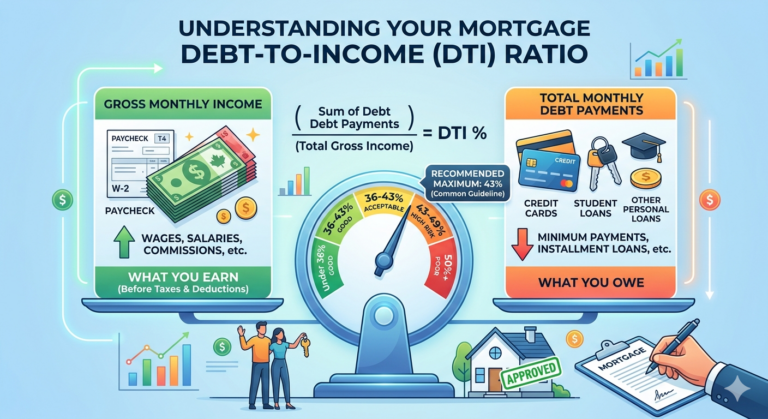
Your debt-to-income ratio (DTI) is a key metric lenders use to assess your ability to repay a mortgage. It’s the percentage of your gross monthly income that goes towards debt payments. While some programs allow for DTIs up to 50%, a lower DTI (e.g., 36-43%) generally makes you a stronger borrower. Not understanding your DTI or how new debt impacts it is a common mistake. Use our [DTI Calculator](/dti-calculator-2025/) to get a clear picture of where you stand and manage your debt responsibly before applying.
Who Should NOT Pursue a Mortgage in St. Joseph Right Now?
While homeownership in St. Joseph is a viable goal for many, it’s not the right time for everyone. Understanding if you fall into one of these categories can save you significant time, money, and stress.
Unstable Income or Job Security Concerns
If your employment is unstable, you’ve recently changed jobs and are still on probation, or your income is highly variable and unpredictable, lenders will likely view you as a higher risk. Mortgage approvals typically require at least two years of consistent employment history and stable income verification. Without this stability, lenders may deny your application, or you might struggle to keep up with payments if approved. Building a solid work history and predictable income should be your priority before committing to a mortgage.
High Debt-to-Income (DTI) Ratio
Even if you have a decent income, if a significant portion of it is already allocated to other debts (student loans, car payments, credit card balances), your debt-to-income (DTI) ratio might be too high for mortgage qualification. Most conventional lenders prefer a DTI below 43%, though some government-backed loans might allow up to 50% under specific circumstances. If your DTI is currently above these thresholds, focus on paying down existing debts to improve your financial standing before applying for a mortgage.
Poor Credit Score with No Plan to Improve
A low credit score (e.g., below 580-620) will severely limit your mortgage options in St. Joseph, often restricting you to FHA loans with potentially higher interest rates, or making approval impossible for conventional loans. While some lenders work with lower scores, the terms will be less favorable, leading to higher monthly payments and interest costs over the loan’s life. If your credit score is poor and you haven’t taken steps to improve it, it’s advisable to dedicate time to repairing your credit history first. This means paying bills on time, reducing credit card balances, and avoiding new debt.
Short-Term Plans in the Area
If you anticipate moving out of St. Joseph within the next two to five years, purchasing a home might not be the most financially sound decision. The costs associated with buying and selling a home, including closing costs, real estate agent commissions, and potential repair expenses, can be substantial. It often takes several years to build enough equity to offset these costs, especially if the market experiences a slowdown. For short-term stays, renting might be a more cost-effective and flexible option.
Insufficient Savings for Down Payment and Closing Costs
Even with low down payment loan options, you will still need funds for closing costs, which can range from 2% to 5% of the loan amount. If you don’t have these funds saved, or if using them would deplete your emergency savings, it might be too risky to buy a home. Lenders also like to see cash reserves (money left over after down payment and closing costs) as a buffer for unexpected expenses. Without adequate savings, you could face financial hardship shortly after moving in. Consider building up a stronger financial cushion first.
Getting Started: Your Next Steps to Homeownership in St. Joseph
Ready to take the plunge into the St. Joseph housing market? Here’s a practical guide to your next steps.
Check Your Credit Report and Score
Your credit score is a major factor in determining your loan eligibility and interest rate. Obtain a copy of your credit report from all three major bureaus (Equifax, Experian, TransUnion) and review them for accuracy. Dispute any errors immediately. Understand your FICO score and take steps to improve it if it’s below your desired threshold (e.g., 620 for conventional, 580 for FHA). A higher score can save you tens of thousands of dollars over the life of your loan.
Calculate Your Affordability
Before you even look at homes, understand what you can truly afford. This involves more than just your monthly mortgage payment; it includes property taxes, homeowner’s insurance (PITI), and potentially homeowner’s association (HOA) fees. Use our [Affordability Calculator](/affordability-calculator-2025/) to input your income, debts, and desired down payment to get a realistic estimate of your comfortable price range. This will help you narrow down your home search to financially feasible options.
Get Pre-Approved for a Mortgage
As mentioned earlier, pre-approval is a crucial step. It involves a lender reviewing your financial documents (income, assets, credit) and giving you a conditional approval for a specific loan amount. This not only clarifies your budget but also strengthens your offer when you find the perfect home in St. Joseph. A pre-approval from a reputable lender shows sellers you’re a serious and qualified buyer, which can be a significant advantage in a competitive market.
Use Mortgage Comparison Tools
Don’t leave money on the table. Utilize online comparison tools to gather quotes from multiple lenders without having to individually contact each one. Our [Mortgage Calculator](/mortgage-calculator-2025/) can help you estimate payments, while the [Rate Comparison Tool](/mortgage-rate-comparison-tool-2025/) will show you how different lenders stack up on interest rates and APRs. You can also use our [Loan Eligibility Checker](/loan-eligibility-checker-tool-2025/) to quickly see which loan programs you might qualify for based on your basic information.
Call Lenders for Specific Quotes
Once you’ve done your preliminary research and know your pre-approval amount, reach out to a few top contenders for detailed, personalized quotes. Discuss your specific needs, such as a low down payment, VA benefits, or a desire for a fast closing. Be prepared to provide financial documentation. This personalized conversation will allow you to ask detailed questions about fees, specific loan terms, and the lender’s overall process, helping you make an informed decision. Explore options through our [Blogs Hub](/blogs/) for more insights into lender comparisons.
Frequently Asked Questions About St. Joseph Mortgage Lenders
Here are answers to some common questions homebuyers have about securing a mortgage in St. Joseph, Missouri.
Is St. Joseph a good place to buy a home in 2026?
St. Joseph continues to be an attractive option for homebuyers in 2026. Its affordability compared to larger cities, strong community feel, and diverse job market make it appealing. The city offers a range of housing styles and neighborhoods. While market conditions can fluctuate, St. Joseph generally provides a stable environment for homeownership, especially for those seeking value and a strong sense of community. Always research local market trends before making a decision.
What credit score do I need to get a mortgage in St. Joseph?
The minimum credit score required depends on the type of loan you seek. For FHA loans, you might qualify with a score as low as 580 (though 620+ is often preferred by lenders). Conventional loans typically require a minimum score of 620-640, with the best rates reserved for scores of 740 and above. VA loans don’t have an official minimum from the VA, but most lenders impose a minimum of 620-640. USDA loans generally require a minimum score around 640. Aiming for a score of 680 or higher will give you access to the widest range of competitive mortgage products.
Can I get a mortgage with no money down in St. Joseph?
Yes, absolutely. VA loans for eligible veterans offer 0% down payment with no private mortgage insurance. USDA Rural Development loans also require 0% down for properties in eligible rural areas and for qualified low-to-moderate income borrowers. Additionally, many homebuyers in St. Joseph utilize Down Payment Assistance (DPA) programs from the Missouri Housing Development Commission (MHDC), which can provide funds to cover the entire down payment, effectively making it a no-money-down situation from your personal savings.
How long does it take to close on a house in St. Joseph?
The typical timeline for closing on a house in St. Joseph, Missouri, generally ranges from 30 to 60 days from the time your offer is accepted. Several factors influence this, including the lender’s efficiency, the complexity of your loan application, the speed of the appraisal and underwriting process, and how quickly you provide requested documents. Government-backed loans (FHA, VA, USDA) can sometimes take slightly longer than conventional loans due to additional requirements. Some efficient lenders can close in as little as 20-25 days under ideal circumstances.
Are local credit unions good for mortgages in St. Joseph?
Yes, local credit unions in St. Joseph can be excellent options for mortgages. They often provide personalized service, competitive rates (especially for members), and may be more flexible with borrowers who have unique financial situations or credit challenges. Credit unions are known for their community focus and often offer special programs for first-time homebuyers or those with specific local needs. It’s always a good idea to include local credit unions in your comparison shopping, alongside national banks and online lenders, when seeking a mortgage. For specific options, consider exploring lenders who operate in a state like [Texas Lenders](/best-mortgage-lenders-in-texas-2025/) for a comparison on regional offerings.
This article is for informational purposes only and does not constitute financial or legal advice. Mortgage rates, loan limits, and program requirements change frequently. Always consult a licensed mortgage professional and verify current rates directly with lenders before making any financial decisions.