Mortgage Lenders for Bad Credit: Get Approved Even With Low Scores
Buying a home is a cornerstone of the American dream, but for many, the path to homeownership can feel blocked by a less-than-perfect credit history. If you’ve been told your credit score is too low to qualify for a mortgage, it’s understandable to feel discouraged. The good news is that securing a home loan with what’s often considered “bad credit” is not only possible but a reality for thousands of Americans each year. It simply requires understanding your options, knowing where to look, and being prepared for some specific requirements.
At mortgagetune.com, we specialize in demystifying the mortgage process, helping you understand how lenders evaluate borrowers, and connecting you with resources that can turn your homeownership dreams into a tangible plan. This guide will explore the various loan programs and lender types that cater to individuals with lower credit scores, providing actionable insights into how you can get approved for a mortgage even when your FICO score isn’t in the prime range.
Can You Really Get a Mortgage with Bad Credit?
Yes, absolutely. While a high credit score (generally 740 or above) will always open doors to the most favorable interest rates and terms, a lower credit score does not automatically disqualify you from homeownership. Many lenders and specific government-backed loan programs are designed precisely to assist borrowers who have faced financial challenges or are working to build their credit.
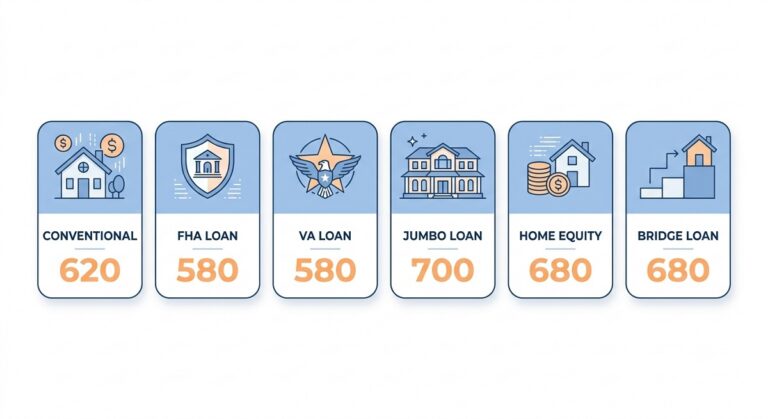
The key is to understand that “bad credit” is a spectrum. What one lender considers too low, another might accept under specific circumstances or with certain compensating factors. For most conventional mortgages (loans not backed by the government), a minimum FICO score of 620 is typically required. However, for government-insured loans, these thresholds can drop significantly. Some programs allow scores as low as 500, though this often comes with a larger down payment requirement.
The mortgage market for 2026, while subject to economic shifts, continues to offer pathways for borrowers across the credit spectrum. While interest rates may fluctuate, the fundamental availability of these programs remains a constant resource for those seeking to buy a home.
Understanding What Lenders Look At Beyond Just Your FICO Score
When you apply for a mortgage, lenders assess your overall financial picture, not just a single number. Your credit score is a crucial indicator of your past financial behavior, but it’s part of a larger puzzle. Here’s what else matters:
- Debt-to-Income (DTI) Ratio: This ratio compares your total monthly debt payments (including the new mortgage payment) to your gross monthly income. Lenders use a DTI calculation to determine if you can realistically afford the monthly payments. For lower credit score borrowers, a lower DTI is often required to offset the credit risk. You can use our free DTI calculator to estimate yours.
- Down Payment: A larger down payment signals greater financial stability and reduces the lender’s risk. While 20% is ideal to avoid Private Mortgage Insurance (PMI), programs like FHA loans allow for down payments as low as 3.5%, and VA and USDA loans offer 0% down. With lower credit, a larger down payment can be a significant compensating factor.
- Employment History and Stability: Lenders prefer to see a consistent work history, typically two years in the same job or field. This demonstrates a reliable income stream.
- Cash Reserves: Having savings beyond your down payment and closing costs provides a buffer for unexpected expenses and reassures lenders of your ability to manage finances.
- Credit History Details: Lenders will review your full credit report, not just the score. They look at the types of accounts you have, payment history (any late payments, bankruptcies, foreclosures), and how long your credit accounts have been open. Recent bankruptcies or foreclosures can be deal-breakers for some programs but less impactful after a few years.
Government-Backed Mortgage Programs for Lower Credit Scores
These loan programs are often the best starting point for borrowers with less-than-perfect credit because they come with more flexible underwriting guidelines compared to conventional loans.
FHA Loans: The Most Common Option
FHA loans (Federal Housing Administration) are insured by the government, which reduces the risk for lenders, making them more willing to approve borrowers with lower credit scores.
- Credit Score Minimums: Generally, a FICO score of 580 qualifies you for a 3.5% down payment. If your score is between 500 and 579, you might still qualify, but you’ll likely need a larger down payment, typically 10%.
- Down Payment: As low as 3.5% of the purchase price.
- DTI Ratio: FHA is often more flexible with DTI, sometimes allowing ratios up to 50% or even 55% with strong compensating factors like significant cash reserves or a very low housing payment compared to income.
- Mortgage Insurance: FHA loans require both an upfront mortgage insurance premium (UFMIP) and an annual mortgage insurance premium (MIP) for the life of the loan (or at least 11 years, depending on the loan-to-value ratio). This is a trade-off for the lower credit requirements.
- Property Requirements: The home must meet FHA appraisal standards to ensure it is safe, sound, and secure.
Many lenders specialize in FHA loans. If you’re considering this path, exploring our FHA Loans Guide can help you find suitable lenders.
VA Loans: Zero Down for Veterans and Service Members
VA loans are a tremendous benefit for eligible service members, veterans, and surviving spouses. They offer some of the most generous terms, including no down payment and no mortgage insurance.
- Credit Score Minimums: The VA itself does not set a minimum credit score. Instead, individual VA-approved lenders set their own “lender overlays.” Most lenders typically look for a FICO score of at least 620 to 640. However, some lenders may consider scores as low as 580 with manual underwriting and strong compensating factors.
- Down Payment: 0% down payment is standard.
- DTI Ratio: VA guidelines are also very flexible on DTI, often allowing higher ratios (e.g., up to 41% without considering residual income, higher with it) if the borrower has sufficient residual income (money left over after all major expenses are paid).
- Funding Fee: A VA funding fee is usually required, but it can be financed into the loan or waived for veterans with service-connected disabilities.
- Eligibility: Requires a Certificate of Eligibility (COE) to prove service requirements have been met.
USDA Loans: Rural Homeownership with No Down Payment
USDA loans (United States Department of Agriculture) are designed to promote homeownership in eligible rural and suburban areas.
- Credit Score Minimums: Like VA loans, the USDA does not set an official minimum. Lenders typically look for a FICO score of 640 or higher for streamlined processing. Scores below 640 may be considered through manual underwriting, which involves a more thorough review of your financial history and compensating factors.
- Down Payment: 0% down payment.
- Income Limits: There are income limits based on household size and location, ensuring the program benefits low-to-moderate-income borrowers.
- Location Restrictions: The property must be located in an eligible rural area, as defined by USDA. Our affordability calculator can help you gauge your potential eligibility based on location and income.
- Guaranteed Fee: USDA loans require both an upfront guarantee fee and an annual fee, similar to FHA’s mortgage insurance.

Non-Qualified Mortgage (Non-QM) Lenders
Beyond government-backed loans, some private mortgage lenders offer Non-QM loans. These loans don’t conform to traditional lending standards set by Fannie Mae or Freddie Mac but cater to unique borrower situations, including those with challenging credit histories.
- Flexibility: Non-QM lenders have more flexible underwriting guidelines, making them an option for those who don’t fit conventional or government-backed criteria. This could include recent bankruptcies, foreclosures, or unique income situations (e.g., self-employed individuals with complex tax returns).
- Higher Costs: The trade-off for this flexibility is typically higher interest rates and fees. Lenders take on more risk, and they price that risk into the loan terms.
- Documentation: While flexible on some aspects, Non-QM loans often require alternative documentation for income or assets, such as bank statements instead of W-2s for self-employed borrowers.
- Down Payment: Down payment requirements can vary widely but are often higher than FHA or VA loans, sometimes 10-20% or more.
Exploring private lenders could be a suitable option if you’ve exhausted traditional routes. You can learn more in our guide on Private Lenders.
Strategies to Get Approved with Low Credit Scores
Even if your credit score is currently low, there are proactive steps you can take to strengthen your application and increase your chances of approval.
1. Identify and Address Credit Report Errors
Errors on your credit report are surprisingly common and can drag down your score. Obtain a copy of your credit report from all three major bureaus (Equifax, Experian, TransUnion) and dispute any inaccuracies. This simple step can sometimes boost your score quickly.
2. Pay Down Existing Debt
Lowering your credit utilization ratio (the amount of credit you’re using compared to your total available credit) can significantly improve your score. Aim to keep credit card balances below 30% of your limit, or even 10% for optimal impact. A lower overall debt burden also improves your DTI ratio.
3. Build a Payment History
Consistent, on-time payments are the most powerful factor in your credit score. If you have active credit accounts, make sure to pay all bills on time, every time. If you have a thin credit file (not much credit history), consider opening a secured credit card or becoming an authorized user on a trusted family member’s card to build a positive history.
4. Save for a Larger Down Payment
As mentioned, a bigger down payment reduces lender risk. If you can put down 10-20% or more, it can act as a strong compensating factor for a lower credit score and potentially unlock better terms. Use our mortgage calculator to see how different down payment amounts impact your monthly payments.
5. Consider a Co-Borrower or Co-Signer
If you have a trusted family member or friend with excellent credit and stable income who is willing to co-sign or co-borrow with you, it can significantly strengthen your application. Be aware that a co-signer is equally responsible for the debt, and any missed payments will impact their credit as well.
6. Improve Your DTI Ratio
Beyond paying down debt, you can improve your DTI by increasing your income or reducing other monthly expenses. Lenders scrutinize DTI, especially for lower credit applicants. Our DTI Calculator can help you understand this critical number.
Types of Lenders Who Work with Bad Credit
Not all lenders are created equal when it comes to flexibility. Here’s who to focus on:
- Mortgage Brokers: Brokers act as intermediaries, working with multiple lenders. They can “shop around” for you, finding lenders whose specific programs and underwriting criteria are best suited for your unique credit situation. They often have access to niche lenders that direct banks don’t.
- FHA/VA/USDA Approved Lenders: Many large banks, credit unions, and independent mortgage companies are approved to offer these government-backed loans. Some specialize in them and are more experienced with flexible underwriting. For example, some of the Fastest Lenders in 2025 might be those that streamline their FHA/VA processes.
- Credit Unions: Often more community-focused, credit unions may offer more personalized service and sometimes greater flexibility for their members, even with lower credit scores. Their underwriting can sometimes be more lenient than larger banks.
- Local and State Housing Finance Agencies (HFAs): These agencies often offer down payment assistance (DPA) programs that can be combined with FHA, VA, or USDA loans. Some DPA programs have slightly different credit score requirements or offer credit counseling as part of the process, making homeownership more accessible.
- Specialized “Non-QM” Lenders: These lenders operate outside conventional guidelines and are more equipped to handle complex scenarios, including those with recent credit events or lower scores. Be prepared for higher rates and fees.
When comparing lenders, make sure to use our rate comparison tool to see how different offerings stack up. Don’t be afraid to get quotes from at least three to five lenders to compare terms and identify the best fit for your situation.

Real-World Qualification Math: An Example
Let’s consider a borrower, Sarah, who has a FICO score of 590, making her ineligible for conventional loans and on the cusp for many FHA lenders requiring 580+.
- Scenario: Sarah wants to buy a home for $250,000. Her gross monthly income is $4,000. Her current monthly debts (car payment, student loans, credit cards) total $800.
- FHA Loan Consideration:
- Minimum Score: A 590 score technically qualifies her for FHA’s 3.5% down payment option if a lender accepts it.
- Down Payment: 3.5% of $250,000 = $8,750.
- Estimated New Mortgage Payment (Principal, Interest, Taxes, Insurance, MIP): Let’s estimate this at $1,800/month (this will vary greatly with rates).
- New Total Monthly Debt: $800 (current debts) + $1,800 (new mortgage) = $2,600.
- DTI Calculation: $2,600 / $4,000 (gross income) = 65%.
- The Challenge: Even though her credit score might be acceptable to an FHA lender, her DTI of 65% is likely too high for most FHA lenders, who typically cap DTI around 50-55% even with strong compensating factors.
What Sarah needs to do:
1. Reduce Debt: Sarah would need to significantly pay down her existing debts to lower her DTI. If she could reduce her current debts from $800 to $400 per month, her DTI would drop to ($400 + $1,800) / $4,000 = 55%, which might be acceptable.
2. Increase Down Payment: If she could put down 10% ($25,000), her mortgage principal would be lower, reducing her monthly payment and, thus, her DTI.
3. Improve Credit Score: Even a slight increase in her FICO score to 620 could open up more lender options and potentially slightly better terms.
This example illustrates that a low credit score isn’t the only hurdle; lenders look at the entire financial picture, especially DTI. Our loan eligibility checker can give you a preliminary assessment of your standing.
Honest Limitations and Trade-offs of Getting a Mortgage with Bad Credit
While approval is possible, it’s crucial to be realistic about the implications:
- Higher Interest Rates: Lenders charge higher interest rates to borrowers with lower credit scores to compensate for the increased risk of default. This means a higher monthly payment and significantly more paid over the life of the loan. Even a half-percent difference on a large loan can cost tens of thousands of dollars over 30 years.
- More Fees: You might encounter higher origination fees, discount points (prepaid interest), or other closing costs.
- Stricter Underwriting: Expect a more thorough review of your finances. Lenders will scrutinize your employment history, bank statements, and any explanations for past credit issues more closely.
- Fewer Lender Options: Your choices of lenders will be more limited compared to someone with excellent credit. Not all banks or brokers work with every loan program.
- Mandatory Mortgage Insurance: FHA and USDA loans require mortgage insurance, which adds to your monthly housing expense. Conventional loans with less than 20% down also require PMI.
- Lower Loan Amounts: Lenders may be less willing to approve you for the maximum loan amount you might otherwise qualify for if your credit were stronger.
Who Should NOT Pursue a Mortgage with Bad Credit (Right Now)
While getting a mortgage with bad credit is achievable, it’s not always the smartest financial move for everyone immediately. You might consider waiting and improving your financial standing if:
- Your Credit Score is Extremely Low (Below 500): While some FHA lenders technically accept 500, options are very limited, and the terms will be punitive. Focusing on credit repair for 6-12 months could yield significant improvements.
- Your DTI Ratio is Too High: If your total debt obligations (including the estimated mortgage payment) consume more than 50% of your gross income, even FHA might be a stretch. This indicates a high financial burden.
- You Have Very Little or No Down Payment Saved: While 0% down options exist (VA, USDA), having some skin in the game, especially with lower credit, shows commitment and reduces lender risk. If you can’t even manage 3.5% for an FHA loan, it might be wise to save more.
- You Have No Cash Reserves: Beyond the down payment and closing costs, having an emergency fund (3-6 months of living expenses) is crucial. Without it, you’re vulnerable to financial setbacks that could jeopardize your homeownership.
- You’re Not Ready for Higher Costs: If higher interest rates and mortgage insurance premiums will strain your budget, it might be better to wait until you can qualify for more favorable terms.
- You Have Recent, Significant Negative Credit Events: A recent bankruptcy (within 2 years), foreclosure (within 3 years), or severe delinquencies can be absolute roadblocks for most programs. Time is often the best healer for these situations.
For those in a challenging position, focusing on credit improvement strategies for 6-12 months often leads to better loan options and significant long-term savings. Our Blogs Hub offers many articles on improving financial health.
The Bottom Line: Patience and Preparation Are Key
Securing a mortgage with bad credit isn’t a pipe dream; it’s a realistic goal with the right approach. It demands thorough research, understanding the specific requirements of various loan programs, and a willingness to improve your financial profile.
Start by getting a realistic assessment of your current credit situation and financial health. Utilize the free calculators and tools available on mortgagetune.com, such as the Mortgage Calculator and Affordability Calculator, to understand what you can truly afford. Seek out lenders who specialize in government-backed loans or those with flexible underwriting. Don’t be afraid to ask questions and explore all your options.
Your path to homeownership might take a bit more effort, but with diligent preparation and the right guidance, you can navigate the mortgage process successfully.
This article is for informational purposes only and does not constitute financial or legal advice. Mortgage rates, loan limits, and program requirements change frequently. Always consult a licensed mortgage professional and verify current rates directly with lenders before making any financial decisions.