FHA Mortgage Lenders in FHA Mortgage Lenders For Low Down Payment In Buffalo New York: Low Down Payment Options 2026
Buying a home in Buffalo, New York, can be an exciting journey, especially with programs designed to make homeownership more accessible. For many first-time buyers and those with less-than-perfect credit, a Federal Housing Administration (FHA) loan stands out as a powerful option, primarily due to its low down payment requirement. In 2026, FHA loans continue to offer a pathway to homeownership with as little as 3.5% down, making them a cornerstone for many Buffalo residents seeking an affordable entry into the housing market.
This guide will walk you through the specifics of securing an FHA loan in Buffalo, detailing loan limits, qualification criteria, and how to connect with the best FHA-approved lenders in the area. We’ll also explore local down payment assistance programs that can be stacked with FHA financing, further reducing your out-of-pocket costs.
MortgageTune.com is a resource for general information and tools. We are not a lender or financial advisor. Always consult with a licensed mortgage professional for personalized advice.
The Buffalo, NY Housing Market at a Glance (2026)
Buffalo, New York, continues to be an attractive market for homebuyers due to its relative affordability compared to other major East Coast cities. The city has seen consistent revitalization, with a growing job market and a diverse range of neighborhoods offering everything from historic homes to modern condos. While housing prices have steadily increased over the past few years, Buffalo still presents opportunities for buyers, particularly those looking for starter homes or properties that qualify for FHA financing.
In 2026, the Buffalo market, encompassing Erie County, is characterized by a stable but competitive environment. Single-family homes, often with median prices ranging from $220,000 to $280,000, are within reach for many FHA borrowers. The demand for well-maintained properties, especially those close to revitalized urban centers or thriving suburban communities, remains strong. An FHA loan can be particularly impactful in this market, allowing buyers to conserve cash while still securing a competitive interest rate. Understanding the local market dynamics is crucial when preparing your home buying strategy.
Why Choose an FHA Loan in Buffalo?
FHA loans are insured by the Federal Housing Administration, which means the government backs the loan, reducing risk for lenders. This backing allows lenders to offer more favorable terms to borrowers who might not qualify for conventional loans. For Buffalo homebuyers, F several specific advantages make FHA loans highly appealing:
- Low Down Payment: The most significant draw for many is the minimum 3.5% down payment. For a $250,000 home, this means you only need to bring $8,750 to closing, far less than the typical 5-20% required for conventional mortgages. This frees up your savings for other essential costs like closing expenses or home improvements.
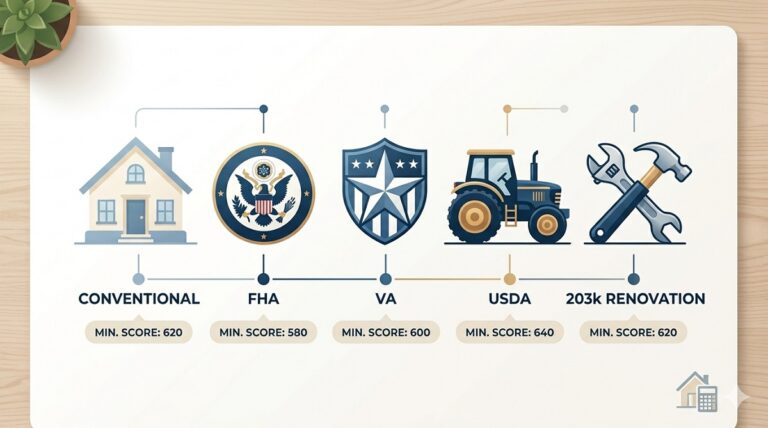
- Flexible Credit Score Requirements: FHA loans generally have more lenient credit score criteria. While most lenders prefer a credit score of 580 or higher for the 3.5% down payment, some may consider scores as low as 500 with a larger down payment (typically 10%). This flexibility opens doors for individuals who may have faced financial setbacks.
- Easier Debt-to-Income (DTI) Limits: FHA guidelines are often more forgiving regarding your debt-to-income ratio (DTI), which compares your monthly debt payments to your gross monthly income. While the standard DTI limit is often around 43%, FHA allows for higher ratios, sometimes up to 50-55%, especially if you have strong compensating factors like a high credit score, significant cash reserves, or a stable job history. You can calculate your potential DTI with our dedicated DTI calculator.
- Assumable Loans: An often-overlooked benefit is that FHA loans are assumable. This means if you decide to sell your home in the future, a qualified buyer could potentially take over your existing mortgage, including its interest rate. In a rising interest rate environment, this can be a significant selling point.
Understanding FHA Loan Limits for Erie County (Buffalo) in 2026
FHA loan limits are established annually by the Department of Housing and Urban Development (HUD) and vary by county, reflecting local housing costs. These limits dictate the maximum amount you can borrow with an FHA-insured mortgage. For Erie County, which includes Buffalo, the FHA loan limits are generally set at the “low-cost area” floor, though they can be higher if the area is designated as high-cost.
For 2026, based on current trends and projections, the FHA loan limit for a single-family home in Erie County (Buffalo) is projected to be approximately $520,000. It’s important to note that these figures are projections and the official HUD limits for 2026 will be released in late 2025. Always confirm the most current limits with your lender.
Here’s an estimated breakdown for multi-unit properties in Erie County for 2026:
- One-Unit Property: ~$520,000
- Two-Unit Property (Duplex): ~$665,000
- Three-Unit Property (Triplex): ~$805,000
- Four-Unit Property (Quadplex): ~$1,000,000
These limits mean you can use an FHA loan not only for a single-family home but also for multi-unit properties (up to four units) if you plan to occupy one of the units as your primary residence. This presents an excellent opportunity for house hacking, where rental income from other units can help offset your mortgage payments. To get a clearer picture of what your payments might look like within these limits, try our mortgage calculator.

Top FHA Mortgage Lenders Serving Buffalo, New York
Finding the right lender is crucial for a smooth FHA loan process. The “best” lender often depends on your specific financial situation, desired level of service, and comfort with digital versus in-person interactions. Good FHA lenders understand the nuances of the program, offer competitive rates, and prioritize clear communication.
Here are general categories of lenders that serve the Buffalo market and are strong contenders for FHA loans:
National Lenders with Strong Buffalo Presence
Large national lenders often have robust online platforms, competitive interest rates, and streamlined application processes. Many maintain physical branches or a strong presence in the Buffalo area through loan officers.
- Rocket Mortgage (Quicken Loans): Known for its technology-driven application process, Rocket Mortgage makes it easy to apply for an FHA loan online. They offer a strong focus on customer service and clear communication, which can be beneficial for first-time homebuyers. Their wide reach ensures they’re familiar with FHA nuances across various markets.
- LoanDepot: Another prominent online lender, LoanDepot offers a fully digital mortgage experience with competitive FHA rates. They aim for a quick approval and closing process, which can be advantageous in a competitive market.
- Chase Bank: With a significant presence in New York State, including numerous branches in Buffalo, Chase offers FHA loans with the backing of a large, established financial institution. Their branch network allows for in-person consultations, which some borrowers prefer.
- Wells Fargo: Wells Fargo is a long-standing mortgage lender offering FHA loans nationwide. They have a history of working with a wide range of borrowers and provide both online and in-person support. Their extensive resources can be helpful for complex financial situations.
These lenders often handle a high volume of FHA loans and are typically well-versed in the requirements. However, it’s always wise to compare their offers with others.
Local Buffalo Lenders Focused on Community
Local banks and credit unions often provide a more personalized experience, with loan officers deeply familiar with the Buffalo housing market and local assistance programs. They may offer a more hands-on approach, which can be invaluable for first-time buyers.
- Local Credit Unions (e.g., Summit FCU, Northwest Bank): Many credit unions in the Buffalo area are FHA-approved lenders. They are member-focused, often offering competitive rates and lower fees due to their non-profit structure. Their local presence means they understand community-specific needs and programs. For instance, Summit FCU, with its branches across Western New York, could be a strong local option.
- Regional Banks (e.g., M&T Bank, Evans Bank): M&T Bank, headquartered in Buffalo, and other regional banks like Evans Bank, have a strong commitment to the local community. They often have dedicated teams for FHA loans and are knowledgeable about New York State and local down payment assistance programs, which can be a significant advantage. Their local appraisers and real estate connections can also streamline the process.
- Independent Mortgage Brokers: These professionals work with multiple lenders, acting as an intermediary to find you the best FHA loan product and rate. A local broker in Buffalo can provide invaluable insights into market conditions and connect you with lenders who might be more flexible or offer niche programs. They are particularly adept at finding options for buyers with specific needs or credit challenges, sometimes working with Private Mortgage Lenders: A Smart Alternative to Traditional Banks or specialized programs.
Lenders Specializing in Challenging Credit or First-Time Buyers
Some lenders or brokers specifically focus on helping borrowers with unique financial situations or those who are new to the mortgage process. While FHA loans are inherently more flexible, certain lenders go the extra mile.
- Specialized Brokers: Independent mortgage brokers often have access to a broader network of lenders, including those who are more aggressive in approving FHA loans for borrowers with credit scores closer to the 580 minimum or with higher DTI ratios. They can guide you through preparing your application to highlight your strengths.
- Lenders with Strong Counseling Programs: Some lenders offer educational resources and counseling for first-time homebuyers, helping them navigate the complexities of the FHA loan process and better understand long-term financial commitments. This can be especially helpful for those who feel overwhelmed by the home-buying journey.
To truly find the best fit, it’s essential to get multiple quotes. Our rate comparison tool can help you gather and compare offers from various lenders side-by-side.
How to Find the Right FHA Lender in Buffalo for Your Needs
Choosing an FHA lender isn’t just about the lowest interest rate; it’s about finding a partner who understands your goals and the local market. Here’s a strategic approach:
1. Compare Rates and Fees Extensively: Don’t settle for the first offer. Contact at least three to five lenders and request detailed loan estimates (LEs). Pay close attention not only to the interest rate but also to all associated fees, including origination fees, appraisal costs, title insurance, and other closing costs. These can vary significantly between lenders. Use our mortgage rate comparison tool 2025 to organize and evaluate these offers effectively.
2. Evaluate Lender Experience with FHA Loans: An experienced FHA lender will be well-versed in HUD guidelines, paperwork requirements, and common FHA appraisal issues. They can proactively address potential hurdles, leading to a smoother and faster closing. Ask how many FHA loans they close annually and what their average FHA closing time is. Some of the Fastest Mortgage Lenders in 2025 – Get Approved in Days, Not Weeks are highly efficient with FHA loans.
3. Read Reviews and Get Referrals: Online reviews on platforms like Google, Zillow, or the Better Business Bureau can offer insights into other borrowers’ experiences with a lender. Pay attention to comments regarding communication, efficiency, and problem-solving. Asking local real estate agents in Buffalo for their recommendations can also provide valuable leads, as they work with lenders constantly.
4. Look for DPA Program Expertise: If you plan to use a down payment assistance (DPA) program (which is highly recommended for Buffalo FHA buyers), ensure your chosen lender has extensive experience working with those specific programs offered by New York State and local agencies. Some lenders are more proficient than others in combining FHA loans with DPA.
5. Assess Communication and Responsiveness: The mortgage process involves a lot of communication. Choose a lender and loan officer who are responsive, clear in their explanations, and make you feel comfortable asking questions. A good loan officer will educate you, not just process your application.
6. Check Your Eligibility Early: Before you get too deep into the process, use our loan eligibility checker to get an initial idea of what loan types and amounts you might qualify for, including FHA. This can help narrow down your lender search.
Buffalo and New York State Down Payment Assistance (DPA) Programs
Combining an FHA loan with a down payment assistance (DPA) program is an excellent strategy for reducing your upfront costs even further. These programs can provide grants or secondary loans to help cover your FHA’s 3.5% down payment or even closing costs.
New York State HFA (NYS HFA) Programs
The primary statewide entity offering DPA in New York is the New York State Housing Finance Agency (NYS HFA), often through its SONYMA (State of New York Mortgage Agency) programs. SONYMA offers various programs designed to help first-time homebuyers, often pairing DPA with FHA loans.
- SONYMA Achieving the Dream Program: This program is popular for first-time buyers and often works seamlessly with FHA financing. It offers a low interest rate and down payment assistance that can be used for the 3.5% FHA down payment and/or closing costs. The DPA is typically a percentage of the loan amount or a fixed dollar amount, often provided as a 0% interest second mortgage that is forgiven after a certain period if you remain in the home.
- SONYMA Low Interest Rate Program: While not direct DPA, this program offers competitive interest rates on mortgages, which can be combined with SONYMA’s DPA offerings.
- SONYMA Conventional Plus Program: This program combines a low-interest rate conventional loan with down payment assistance. While our focus here is FHA, it’s worth noting that SONYMA has multiple avenues to DPA.
To qualify for SONYMA programs, there are typically income limits, purchase price limits, and homebuyer education requirements. These limits are updated annually and vary by county. For Erie County, these limits are generally higher than for many rural parts of the state but still target moderate-income individuals and families.
Local Buffalo & Erie County DPA Opportunities
While SONYMA is the largest provider, the City of Buffalo and Erie County may have their own localized housing initiatives or collaborate with non-profit organizations to offer additional assistance. These programs are often designed to support specific revitalization efforts or serve very low-to-moderate-income residents.
- City of Buffalo Programs: The City of Buffalo’s Department of Community Development may offer grants or loans for first-time homebuyers within city limits, especially for rehabilitation of existing properties or in targeted neighborhoods. These funds can often be stacked with FHA loans and SONYMA DPA.
- Erie County Programs: Erie County might also have programs, usually administered through its Department of Environment and Planning, aimed at assisting homebuyers. These could include grants for home repairs or down payment assistance.
How to find these local programs:
- Check the websites of the City of Buffalo Department of Community Development and the Erie County Department of Environment and Planning.
- Consult with a local FHA-approved lender or mortgage broker in Buffalo, as they often have the most up-to-date information on available local DPA programs.
- Connect with a HUD-approved housing counseling agency in Buffalo, which can provide free advice and direct you to relevant programs.
By leveraging these DPA programs, Buffalo homebuyers can significantly reduce the amount of cash needed at closing, making homeownership a more tangible reality. Always discuss DPA options with your loan officer early in the process.

FHA Loan Requirements for Buffalo Homebuyers in 2026
While FHA loans are more flexible than conventional mortgages, they still have specific requirements you must meet to qualify. Here’s a breakdown of the key criteria for Buffalo buyers in 2026:
- Credit Score:
- 580 or higher: Qualifies you for the maximum financing of 96.5% (meaning a 3.5% down payment). Most FHA lenders prefer at least a 620 credit score, but 580 is the HUD minimum for this down payment.
- 500-579: You may qualify for an FHA loan, but you’ll be required to make a 10% down payment. Finding a lender willing to go below 580 can be challenging, but it is technically possible under FHA guidelines.
- Down Payment: A minimum of 3.5% of the home’s purchase price is required for credit scores of 580 or above. This down payment can come from your savings, a gift from a family member, or a qualified down payment assistance program.
- Debt-to-Income (DTI) Ratio: Your DTI ratio is calculated as your total monthly debt payments divided by your gross monthly income. FHA guidelines are generally more flexible, often allowing a DTI of up to 43%, and sometimes even as high as 50-55% with strong compensating factors. These factors can include a higher credit score, significant cash reserves after closing, a proven track record of managing higher debt, or a stable job history.
- Property Requirements: The home you purchase must meet specific FHA minimum property standards related to safety, security, and structural soundness. An FHA-approved appraiser will conduct an appraisal that includes an inspection to ensure the property meets these standards. While not as stringent as a full home inspection, it ensures the home is habitable and safe.
- Mortgage Insurance Premium (MIP): All FHA loans require two types of mortgage insurance:
- Upfront Mortgage Insurance Premium (UFMIP): This is 1.75% of the base loan amount, paid at closing. It can be financed into your loan amount, meaning you don’t have to pay it out of pocket.
- Annual Mortgage Insurance Premium (Annual MIP): This is paid monthly as part of your mortgage payment. For loans with a 3.5% down payment, the annual MIP is typically 0.55% of the loan amount per year. Unlike conventional private mortgage insurance (PMI), FHA’s annual MIP generally remains for the life of the loan if your down payment was less than 10%. If you put down 10% or more, the MIP typically falls off after 11 years.
- Occupancy: The FHA loan must be for your primary residence. You are required to move into the home within 60 days of closing and live there for at least one year.
- Stable Income and Employment: Lenders will look for a consistent employment history, typically for the past two years, to ensure you have the financial capacity to make your mortgage payments. This doesn’t mean you can’t change jobs, but consistent income or employment within the same field is generally preferred. Self-employed borrowers will need to provide two years of tax returns and other documentation to verify income.
Understanding these requirements will help you prepare your application and increase your chances of FHA loan approval in Buffalo.
Common Mistakes Buffalo FHA Borrowers Make
Even with flexible FHA guidelines, some common pitfalls can derail your home-buying plans. Being aware of these mistakes can help you avoid them:
1. Not Comparing Lender Offers Thoroughly: This is arguably the biggest mistake. Accepting the first FHA loan offer you receive can cost you thousands of dollars over the life of the loan in higher interest rates or excessive fees. Always get quotes from at least three to five lenders. Our mortgage rate comparison tool 2025 is designed for this exact purpose.
2. Ignoring Down Payment Assistance (DPA) Programs: Many Buffalo homebuyers are unaware of or overlook the available DPA programs. These can significantly reduce your upfront cash requirement. Not exploring SONYMA or local programs means leaving money on the table.
3. Not Understanding Mortgage Insurance Premium (MIP): While MIP makes FHA loans accessible, it’s an added cost. Some borrowers don’t factor this into their long-term affordability plan or fail to realize that for low down payment FHA loans, the annual MIP may last for the life of the loan.
4. Waiting Too Long to Get Pre-Approved: In a competitive Buffalo market, having an FHA pre-approval letter in hand before you start house hunting is critical. It shows sellers you’re a serious and qualified buyer, which can give your offer an edge.
5. Making Major Financial Changes After Application: Once you’ve applied for an FHA loan, avoid opening new credit accounts, taking out new loans, making large purchases on credit, or changing jobs. Any significant change to your credit profile or debt-to-income ratio can jeopardize your loan approval, even if you’re pre-approved.
6. Not Budgeting for Closing Costs: Beyond the down payment, closing costs can range from 2% to 5% of the loan amount. While some can be covered by DPA or lender credits, you should still budget for these expenses. An Affordability Calculator 2025 can help you plan for all costs involved.
7. Overlooking Property Condition: While FHA appraisals focus on minimum safety standards, they are not a substitute for a full home inspection. A thorough inspection can uncover issues not addressed by the FHA appraisal, saving you from unexpected repair costs after closing.
Who Should NOT Pursue an FHA Loan in Buffalo?
While FHA loans are a fantastic tool for many, they are not universally the best option. Consider these scenarios where an FHA loan might not be the most advantageous path:
- Borrowers with Large Down Payments (20% or More): If you have 20% or more of the home’s purchase price for a down payment and an excellent credit score, a conventional loan will likely be more cost-effective. You can avoid FHA’s mandatory Mortgage Insurance Premium (MIP) altogether with a conventional loan and a 20% down payment, saving you hundreds of dollars per month and thousands over the loan’s life.
- Borrowers with Excellent Credit and Low DTI: If your credit score is 740 or higher and you have a low debt-to-income ratio, you’ll likely qualify for highly competitive interest rates on conventional loans. These rates might be lower than FHA rates, and you’ll have the flexibility to avoid mortgage insurance with a 20% down payment or cancel it once you reach 20% equity if you put less down.
- Those Buying Very High-Value Homes Above FHA Limits: If you are looking at properties in Buffalo or Erie County that significantly exceed the FHA loan limits (projected around $520,000 for a single-family home in 2026), an FHA loan simply won’t work for the full purchase price. You would need to make a substantial down payment to bring the loan amount within FHA limits or explore a conventional jumbo loan.
- Borrowers Who Want to Avoid Mortgage Insurance Entirely: FHA loans always come with both upfront and annual mortgage insurance. If avoiding mortgage insurance is a top priority, a conventional loan with at least 20% down or a VA loan (for eligible veterans) would be better alternatives.
- Investors Looking for Non-Owner Occupied Properties: FHA loans are strictly for primary residences. If you’re looking to purchase an investment property in Buffalo that you do not intend to occupy, an FHA loan is not an option.
For many, the benefits of FHA loans outweigh these considerations, but it’s crucial to understand your financial position and explore all options before making a decision.
Beyond FHA: Exploring Other Low Down Payment Options
While FHA loans are a cornerstone for low down payment homeownership, Buffalo buyers have other paths worth exploring, depending on their eligibility:
- Conventional 97 Loans (3% Down): Offered by Fannie Mae and Freddie Mac, these loans allow for as little as 3% down payment. They are for first-time homebuyers or those who haven’t owned a home in the past three years. While the down payment is slightly lower than FHA’s 3.5%, conventional 97 loans typically require higher credit scores (often 620-680+) and lower DTI ratios compared to FHA. They also require private mortgage insurance (PMI), but unlike FHA’s annual MIP, PMI on conventional loans can eventually be canceled once you reach 20% equity in your home.
- VA Loans (0% Down for Veterans): For eligible active-duty service members, veterans, and surviving spouses, VA loans are arguably the most powerful mortgage product. They offer 0% down payment with no private mortgage insurance (PMI) required. While there is a VA funding fee (which can sometimes be waived), the overall cost of a VA loan is often lower than FHA or conventional options for those who qualify. If you’re a veteran in Buffalo, this should be your first consideration.
- USDA Loans (0% Down for Rural Areas): The USDA Rural Development loan program also offers 0% down payment mortgages. However, these are strictly limited to properties in designated rural areas and have income limits. While Buffalo itself isn’t considered rural, many surrounding areas in Erie County or neighboring counties (like Genesee or Wyoming) may qualify. If you’re open to living just outside the immediate Buffalo metro area, a USDA loan could be a great option.
Ready to Buy Your Buffalo Home? Next Steps
The journey to homeownership in Buffalo with an FHA loan can be rewarding, especially with the right preparation and guidance. Here’s how to move forward:
1. Check Your Credit Score: Understand where you stand. Access your credit report from all three major bureaus (Experian, Equifax, TransUnion) to check for errors and get an idea of your scores. Aim for at least 580 to qualify for the 3.5% down payment.
2. Gather Your Financial Documents: Prepare recent pay stubs, W-2s, tax returns (for the last two years), bank statements, and any other relevant financial records. This will streamline the pre-approval process.
3. Get Pre-Approved: Contact several FHA-approved lenders in Buffalo and get a pre-approval letter. This step is crucial before you start seriously looking at homes, as it clarifies your budget and demonstrates your buying power to sellers.
4. Utilize Our Calculators:
- Use the Affordability Calculator 2025 to understand how much home you can truly afford, considering all monthly expenses.
- For those considering refinancing in the future, check out the refinance calculator.
- Explore all our [Mortgage Tools](/mortgage-tools/) for various calculations.
5. Connect with a Local Real Estate Agent: An experienced Buffalo real estate agent who understands the FHA process can be an invaluable asset. They can help you find FHA-eligible homes, navigate local market conditions, and negotiate offers effectively.
6. Explore Down Payment Assistance: Discuss DPA options with your lender and local housing agencies to see if you qualify for programs that can reduce your out-of-pocket costs.
7. Read More: For additional insights and tips, visit our Blogs .
Buying a home is one of the biggest financial decisions you’ll make, and FHA loans provide an excellent opportunity for many Buffalo residents. By understanding the process, choosing the right lender, and leveraging available resources, you can achieve your dream of homeownership in this vibrant New York city.
MortgageTune.com is a free resource providing general information and tools. We are not a lender, broker, or financial advisor. We do not provide personalized financial advice. For specific financial guidance, please consult with a licensed professional.
This article is for informational purposes only and does not constitute financial or legal advice. Mortgage rates, loan limits, and program requirements change frequently. Always consult a licensed mortgage professional and verify current rates directly with lenders before making any financial decisions.