Can You Buy a Home With a Bad Credit Score? What Lenders Look For
The dream of homeownership often feels out of reach for many Americans, especially those concerned about their credit scores. It’s a common misconception that a “bad” credit score automatically disqualifies you from securing a mortgage. While a lower credit score certainly presents challenges, it doesn’t always mean the end of your home-buying aspirations.
At mortgagetune.com, we aim to provide clear, unbiased information to help you understand the realities of the mortgage market. The short answer is yes, buying a home with a less-than-perfect credit score is often possible, but it requires careful planning, understanding specific loan programs, and knowing exactly what factors lenders scrutinize beyond that three-digit number. Lenders consider a holistic view of your financial health, not just your FICO score.
This guide will break down what “bad credit” means in the context of mortgage lending, explore the specific loan programs designed for borrowers with lower scores, detail the crucial financial elements lenders prioritize, and offer actionable strategies to improve your chances of approval. We’ll also honestly discuss the limitations and potential higher costs involved, so you can make an informed decision about your home-buying journey.
Defining “Bad Credit” in Mortgage Lending
Before diving into solutions, it’s crucial to understand what mortgage lenders typically consider a “bad” or “low” credit score. Credit scores, primarily FICO scores, range from 300 to 850, and their impact on your mortgage eligibility is significant. However, there isn’t one universal cutoff point. Different loan types and individual lenders have varying thresholds.
Most conventional mortgage lenders (those offering loans backed by Fannie Mae and Freddie Mac) generally prefer borrowers with FICO scores of 620 or higher, with the most favorable rates typically reserved for scores above 740. Scores below 620 often fall into the “subprime” or “low credit” category for conventional loans, making approval much more difficult.
For government-backed loans like FHA, VA, and USDA, the minimum credit score requirements are generally lower, opening doors for more borrowers. For instance, the Federal Housing Administration (FHA) allows for scores as low as 500 in some cases, though specific lenders often impose higher internal minimums.
FICO Scores and Lender Perceptions
Lenders use your FICO score as a quick indicator of your creditworthiness – essentially, how likely you are to repay your debts. A lower score signals higher risk to the lender. Here’s a general breakdown of how different FICO score ranges are perceived:
- 740-850 (Excellent): Borrowers in this range qualify for the best interest rates and loan terms.
- 670-739 (Good): Still considered strong, offering competitive rates, though not always the absolute lowest.
- 620-669 (Fair): Many conventional lenders see this as the minimum for approval, often with slightly higher rates.
- 580-619 (Poor): Often requires government-backed loans like FHA or VA. Conventional options are scarce.
- 500-579 (Very Poor): Very limited options, primarily FHA loans with a higher down payment requirement.
It’s important to remember that these are general guidelines. A lender will always review your full credit report, looking at specific accounts, payment history, and any derogatory marks rather than just the score itself. For a quick assessment of your potential eligibility, you can utilize a [loan eligibility checker](/loan-eligibility-checker-tool-2025/) on our site.
Impact of Credit on Loan Terms
Your credit score directly impacts two critical aspects of your mortgage:
1. Interest Rate: A lower credit score almost invariably leads to a higher interest rate. This is how lenders compensate for taking on higher risk. Even a half-percentage point increase can add thousands of dollars to your total cost over the life of a 30-year mortgage.
2. Loan Approval Odds: While certain programs are designed for lower scores, a significantly low score (e.g., below 580) reduces your overall chances of approval, even with these programs. Lenders might also require a larger down payment or more stringent income verification.

Mortgage Programs for Borrowers with Lower Credit Scores
Fortunately, several mortgage programs are specifically designed to help borrowers with less-than-perfect credit achieve homeownership. These are typically government-backed loans, which offer lenders certain guarantees, making them more willing to approve applicants with higher risk profiles.
FHA Loans: A Common Path
FHA (Federal Housing Administration) loans are one of the most accessible options for borrowers with lower credit scores and smaller down payments. The FHA does not lend money directly; instead, it insures loans made by FHA-approved lenders. This insurance protects lenders against losses if a borrower defaults, encouraging them to approve applicants they might otherwise turn away.
- Credit Score Requirements: As of 2026, FHA guidelines generally allow for:
- A FICO score of 580 or higher to qualify for the minimum 3.5% down payment.
- A FICO score between 500 and 579 if you can make a 10% down payment.
- It’s important to note that many individual FHA-approved lenders impose their own “overlays” and may require a minimum FICO score of 620 to 640, regardless of the FHA’s official guidelines.
- Down Payment: The primary draw is the low 3.5% down payment option, which can be a gift from family or a down payment assistance program.
- Mortgage Insurance: FHA loans require both an Upfront Mortgage Insurance Premium (UFMIP) and an annual Mortgage Insurance Premium (MIP), which adds to your monthly payment and can remain for the life of the loan in many cases.
- Property Standards: The home must meet FHA’s minimum property standards, ensuring it’s safe, sound, and secure.
If you believe an FHA loan might be right for you, our [FHA Loans Guide](/who-are-are-the-best-fha-mortgage-lenders-for-low-down-pay/) provides a detailed overview of the process and top lenders.
VA Loans: For Service Members and Veterans
VA loans are an incredible benefit for eligible active-duty service members, veterans, and some surviving spouses. These loans are guaranteed by the U.S. Department of Veterans Affairs and are often considered one of the best mortgage options available.
- Credit Score Requirements: The VA itself does not set a minimum credit score requirement. Instead, it’s up to individual VA-approved lenders to establish their own minimums. Most lenders typically look for a FICO score of 580 to 620, though some may go lower if other aspects of your financial profile are exceptionally strong.
- No Down Payment: Perhaps the most significant advantage is that VA loans often require no down payment (0% down).
- No Mortgage Insurance: Unlike FHA loans, VA loans do not require monthly mortgage insurance premiums, even with 0% down. However, they do have a one-time VA funding fee, which can be financed into the loan.
- Competitive Interest Rates: VA loans typically offer some of the lowest interest rates on the market, even for borrowers with moderate credit scores, because of the government guarantee.
USDA Loans: Rural Opportunities
USDA (United States Department of Agriculture) loans are designed to promote homeownership in eligible rural and suburban areas. These loans also offer favorable terms, including no down payment, for qualified borrowers.
- Credit Score Requirements: Similar to VA loans, the USDA does not set a strict minimum credit score. However, most USDA-approved lenders look for a FICO score of at least 640 to qualify for streamlined processing. Borrowers with scores below 640 might still be approved but will undergo a more manual underwriting process, requiring stronger compensating factors.
- No Down Payment: Like VA loans, eligible borrowers can obtain a USDA loan with 0% down payment.
- Income Limits: USDA loans have specific income limits based on household size and location, ensuring the program serves low-to-moderate-income individuals and families.
- Property Eligibility: The home must be located in a USDA-designated rural or suburban area. You can check property eligibility on the USDA’s website.
- Guaranteed Fee: USDA loans require both an upfront guarantee fee (similar to FHA’s UFMIP) and an annual fee (similar to FHA’s MIP), which are much lower than FHA’s and can be financed into the loan.
Non-QM Loans and Private Lenders
For borrowers who don’t fit traditional lending criteria, including those with very low credit scores, a recent bankruptcy, or unique income situations (e.g., self-employed with complex tax returns), Non-Qualified Mortgage (Non-QM) loans can be an alternative. These loans do not adhere to the strict guidelines of government-backed or conventional loans.
- Credit Score Flexibility: Non-QM lenders often have more flexible credit score requirements, sometimes accepting scores below 500, especially if there are strong compensating factors.
- Higher Interest Rates and Fees: Due to the increased risk, Non-QM loans typically come with significantly higher interest rates, more substantial fees, and sometimes larger down payment requirements (e.g., 20% or more).
- Alternative Documentation: They may offer “bank statement loans” for self-employed individuals, asset-based loans, or even debt service coverage ratio (DSCR) loans for investors, where the property’s income qualifies the loan.
- Private Lenders: Many Non-QM loans are offered by [private mortgage lenders](/private-mortgage-lenders-a-smart-alternative-to-traditional-banks/) or specialized financial institutions rather than traditional banks. While they offer flexibility, it’s crucial to thoroughly vet these lenders and understand all terms and conditions.
What Lenders Really Examine Beyond Your FICO Score
While your credit score is a crucial starting point, lenders conduct a deep dive into your entire financial profile. They want to understand your capacity and willingness to repay the loan. Focusing solely on your FICO score can be misleading; strong performance in other areas can often compensate for a lower score.
Debt-to-Income Ratio (DTI)
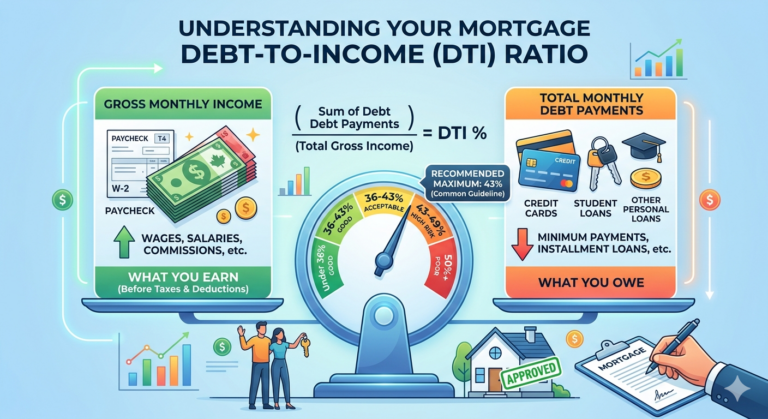
Your Debt-to-Income (DTI) ratio is one of the most critical factors lenders assess. It’s a percentage that compares your total monthly debt payments to your gross monthly income. Lenders typically look at two DTIs:
1. Front-end DTI (Housing Ratio): Your total monthly housing expenses (mortgage principal and interest, property taxes, homeowner’s insurance, HOA fees) divided by your gross monthly income.
2. Back-end DTI (Total Debt Ratio): Your total monthly debt payments (including housing expenses, car loans, student loans, credit card minimums, etc.) divided by your gross monthly income.
Most conventional lenders prefer a back-end DTI of 36% or lower, though they might go up to 43% with strong credit and other compensating factors. FHA loans are more lenient, sometimes allowing DTIs as high as 56.9% in specific scenarios, especially for borrowers with lower credit scores who also have very strong compensating factors like significant cash reserves or a substantial down payment. A lower DTI ratio demonstrates your ability to manage your finances and afford the new mortgage payment. You can calculate yours using our [DTI calculator](/dti-calculator-2025/).
Stable Income and Employment History
Lenders want assurance that you have a consistent and reliable source of income to make your mortgage payments. They typically look for a minimum of two years of stable employment in the same field or with the same employer.
- Verifiable Income: You’ll need to provide pay stubs, W-2 forms, and federal tax returns (often for the past two years) to verify your income.
- Self-Employment: For self-employed individuals, lenders scrutinize business income more closely, often requiring two years of consistent profitability demonstrated through tax returns and profit and loss statements. Some Non-QM loans can offer alternative income verification like bank statements.
- Income Type: The type of income matters. Consistent salary or hourly wages are generally preferred over irregular bonus income or commissions, though these can be counted if they have a consistent history.
Down Payment and Reserves
A larger down payment can significantly bolster your application, especially if you have a lower credit score. It reduces the loan amount, thereby lowering the lender’s risk.
- Down Payment Size: While 3.5% for FHA or 0% for VA/USDA is appealing, putting down 10%, 15%, or even 20% or more on any loan type demonstrates financial strength and commitment.
- Source of Funds: Lenders will verify the source of your down payment funds to ensure they are legitimate (e.g., from savings, sale of assets, or a documented gift from a family member).
- Cash Reserves: Beyond the down payment and closing costs, lenders like to see cash reserves – typically equivalent to 2-6 months of mortgage payments – remaining in your bank account after closing. These reserves act as a safety net, indicating you can handle unexpected expenses or temporary income disruptions without defaulting on your mortgage.

Asset Verification
In addition to down payment and reserves, lenders will verify other assets you hold. This includes checking accounts, savings accounts, investment accounts, and retirement funds. While you won’t necessarily liquidate these for your down payment, their existence demonstrates overall financial stability and liquidity, which can be a strong compensating factor for a lower credit score. Providing statements for the past 60-90 days is standard practice.
Payment History and Derogatory Marks
Your credit report doesn’t just show a score; it details your entire payment history. Lenders meticulously examine this history for any “derogatory marks” that could signal future risk.
- Late Payments: Recent late payments (especially within the last 12-24 months) on other loans or credit cards are a major red flag. One or two isolated late payments from years ago might be forgivable, but a pattern of missed payments will be a significant hurdle.
- Collections and Charge-offs: Accounts sent to collections or written off by creditors indicate a failure to pay debts. Lenders will want to understand the circumstances and see that these issues have been resolved or are being managed.
- Bankruptcies and Foreclosures: These are the most severe derogatory marks.
- Bankruptcy: For Chapter 7 bankruptcy, you typically need to wait 2 years for FHA/VA loans and 4 years for conventional loans from the discharge date. For Chapter 13, it can be 1 year from filing (with court permission) or discharge for FHA/VA, and 2 years from discharge or 4 years from dismissal for conventional.
- Foreclosure: Generally requires a waiting period of 3 years for FHA/VA loans and 7 years for conventional loans from the completion date of the foreclosure.
- Lenders will also look for re-established credit after such events.
Understanding these factors is crucial. If you’re wondering how your specific situation stacks up, our [Loan Eligibility Checker](/loan-eligibility-checker-tool-2025/) can give you an initial assessment.
The Financial Reality of Low Credit Mortgages
While it’s possible to buy a home with a lower credit score, it’s essential to be realistic about the financial implications. These loans often come with higher costs and more stringent requirements than those for borrowers with excellent credit.
Higher Interest Rates and Fees
The most direct consequence of a low credit score is a higher interest rate on your mortgage. Lenders price in the increased risk they’re taking on.
- Cost Over Time: Even a small increase in the interest rate can significantly increase your total cost over the life of a 15 or 30-year mortgage. For example, on a $300,000 loan, a 0.5% higher interest rate could mean tens of thousands of dollars more in interest paid over 30 years.
- Lender Fees: You might also encounter slightly higher origination fees or other lender charges as part of the closing costs.
- Mortgage Insurance: As mentioned with FHA loans, government-backed programs often come with mortgage insurance premiums, which add to your monthly expense and protect the lender, not you.
Our [mortgage calculator](/mortgage-calculator-2025/) can help you visualize how different interest rates impact your monthly payment, and our [rate comparison tool](/mortgage-rate-comparison-tool-2025/) can help you see current market averages.
Stricter Underwriting Standards
Lenders will apply more rigorous scrutiny to your application if you have a lower credit score. This means:
- More Documentation: You may need to provide more extensive documentation for your income, assets, and explanations for any credit anomalies.
- Stronger Compensating Factors: Lenders will look for significant compensating factors, such as a very low DTI ratio, substantial cash reserves, a large down payment, or a history of saving money, to offset the credit risk.
- Longer Processing Times: The additional scrutiny and documentation can sometimes lead to longer processing times for your loan application. For those needing a quicker approval, exploring [fastest mortgage lenders](/fastest-mortgage-lenders-in-2025-get-approved-in-days-not-weeks/) might still be an option, but with potentially higher rates.
Limited Lender Options
Not all lenders are equally equipped or willing to work with borrowers with lower credit scores. Traditional banks might have stricter internal policies, while mortgage brokers or specialized lenders might be more flexible. This means you might have fewer choices when shopping for a loan, potentially limiting your ability to find the absolute best rates. It’s crucial to shop around and get quotes from several lenders that specialize in lower credit score programs, perhaps including those known as [best mortgage lenders in Texas 2025](/best-mortgage-lenders-in-texas-2025/) if you are in that region, or generally seeking out FHA or VA loan specialists.
Strategies to Strengthen Your Mortgage Application
If your credit score is currently low, taking proactive steps to improve your financial profile can significantly enhance your chances of mortgage approval and secure more favorable terms.
Improving Your Credit Score Before Applying
This is often the most impactful strategy. Even a small increase in your FICO score can make a difference in your interest rate.
- Review Your Credit Report: Obtain free copies of your credit report from AnnualCreditReport.com and dispute any errors immediately.
- Pay Bills on Time: Payment history accounts for 35% of your FICO score. Set up autopay or reminders to ensure you never miss a payment on any account.
- Reduce Credit Card Debt: High credit utilization (the amount of credit you’re using compared to your available credit limit) negatively impacts your score. Aim to keep your utilization below 30%, ideally below 10%, on all revolving accounts.
- Avoid New Credit: Don’t open new credit accounts or take on new debt in the months leading up to and during your mortgage application process. This can lower your score and complicate underwriting.
- Become an Authorized User: If a trusted family member with excellent credit has a long-standing credit card account, asking to be added as an authorized user (without using the card) can sometimes boost your score, but ensure they manage their credit responsibly.
Saving a Larger Down Payment
As discussed, a larger down payment demonstrates financial responsibility and reduces the loan amount, making you a less risky borrower. Even if a program allows for 3.5% or 0% down, aiming for 5%, 10%, or more can be a strong compensating factor for a lower credit score and can potentially lower your interest rate.
Reducing Your Debt Load
Beyond improving your credit score, lowering your overall debt obligations directly impacts your DTI ratio. Pay down high-interest debts like credit card balances first. Consider paying off small installment loans (like a personal loan or car loan if nearing its end) to free up monthly cash flow. This directly improves your DTI and signals better financial health to lenders.
Utilizing a Co-Borrower
If you have a spouse, partner, or even a parent with strong credit and stable income, adding them as a co-borrower to your mortgage application can significantly improve your chances of approval. Lenders will consider both applicants’ financial profiles, typically using the lower of the two middle FICO scores, but the combined income and assets can make a strong case. Be aware that a co-borrower is equally responsible for the debt.
Exploring Down Payment Assistance (DPA) Programs
Many states and local housing authorities offer Down Payment Assistance (DPA) programs designed to help first-time homebuyers or low-to-moderate-income individuals cover their down payment and closing costs. These programs often come in the form of grants (that don’t need to be repaid) or second mortgages with very favorable terms (low interest, deferred payments). These can be combined with FHA, VA, or USDA loans, further reducing the upfront financial burden. Researching programs in your specific state or city can unveil valuable opportunities.
Who Should NOT Pursue a Mortgage with a Bad Credit Score
While homeownership is often attainable with less-than-perfect credit, it’s not always the right path for everyone. There are situations where delaying a home purchase and focusing on financial improvement is a more financially sound decision. You should seriously reconsider pursuing a mortgage with a bad credit score if:
- You Have Unstable Income or Employment: If your income is highly irregular, or you’ve recently changed jobs multiple times, lenders will view you as a high risk, making approval difficult even with programs for low credit.
- Your Debt-to-Income Ratio is Extremely High: Even with FHA’s flexibility, an unsustainable DTI (e.g., above 50% for all debts) suggests you may struggle to afford the new mortgage payment on top of existing obligations.
- You Have No Savings or Reserves: Without any money saved for a down payment, closing costs, or a financial cushion after closing, you’re entering homeownership in a precarious position. Unexpected home repairs or financial setbacks could quickly lead to default.
- You Have Recent, Severe Derogatory Marks: A very recent bankruptcy, foreclosure, or numerous late payments within the last 12-24 months can make nearly all lenders shy away, regardless of the loan program. It’s often better to wait out the required seasoning periods.
- You Cannot Afford the Higher Costs: If the higher interest rates, mortgage insurance, and potentially stricter terms associated with a low-credit mortgage would strain your budget to the breaking point, waiting until you can qualify for better terms is advisable. Paying too much interest for too long can significantly impact your long-term wealth.
- Your Credit Issues Stem from Unmanaged Spending: If your low credit score is a symptom of ongoing financial mismanagement rather than an isolated event or past hardship, addressing the root causes before taking on a massive new debt is critical.
For those in these situations, focusing on credit repair and saving for a larger down payment first can lead to a much more stable and affordable homeownership experience in the long run.
Taking the Next Steps Towards Homeownership
Buying a home with a bad credit score is a challenging but achievable goal for many. It requires diligence, patience, and a thorough understanding of your options. Don’t let a low credit score deter you from exploring your possibilities.
Assess Your Eligibility and Affordability
The first step is to get a realistic picture of your current financial standing. Use our free tools to gauge what you might qualify for and what you can truly afford:
- [Loan Eligibility Checker](/loan-eligibility-checker-tool-2025/): Get an initial idea of which loan programs might be suitable for your credit and income.
- [affordability calculator](/affordability-calculator-2025/): Understand how much home you can realistically afford based on your income, debts, and down payment.
- [Mortgage Calculator](/mortgage-calculator-2025/): Experiment with different loan amounts, interest rates, and terms to see how they affect your potential monthly payments.
Compare Lenders and Loan Options
Once you have a clearer picture, it’s time to engage with lenders. Don’t settle for the first quote you receive. Work with a few different lenders, especially those specializing in FHA, VA, USDA, or even Non-QM loans, to compare rates, fees, and terms. A mortgage broker can be particularly helpful in this scenario, as they have access to multiple lenders and can help you find the best fit for your unique situation.
Remember, mortgagetune.com is here to provide educational resources and tools to assist you. While we offer expert guides and unbiased reviews, we are not licensed financial advisors or mortgage brokers. The information provided is for educational purposes only and should not be construed as personalized financial advice. Always consult with a qualified mortgage professional to discuss your specific financial situation and borrowing needs. You can find more comprehensive guides and tools on our [Blogs Hub](/blogs/) and [All Tools](/mortgage-tools/) pages.
This article is for informational purposes only and does not constitute financial or legal advice. Mortgage rates, loan limits, and program requirements change frequently. Always consult a licensed mortgage professional and verify current rates directly with lenders before making any financial decisions.