Mortgage Lenders for Low-Income Buyers: Affordable Home Loan Programs
Buying a home can feel out of reach when you’re working with a limited income. However, numerous programs and lenders specialize in making homeownership accessible to low-income buyers across the United States. These options often feature lower down payments, more flexible credit requirements, and sometimes even assistance with closing costs. This guide will help you understand the most impactful affordable home loan programs and how to connect with lenders who can help you secure your dream home.
MortgageTune.com is dedicated to providing clear, unbiased information. Please remember, we are not licensed financial advisors or mortgage brokers. The information presented here is for educational purposes only and should not be considered personalized financial advice. Always consult with a qualified mortgage professional for guidance tailored to your specific situation.
Understanding What Qualifies as “Low-Income” for a Mortgage
When it comes to mortgages, “low-income” isn’t a fixed national number. Instead, it’s typically defined relative to the Area Median Income (AMI) for a specific county or metropolitan statistical area. Most affordable housing programs use percentages of AMI (e.g., 80% AMI or less) to determine eligibility, and these thresholds are updated annually by the Department of Housing and Urban Development (HUD) or other agencies. What’s considered low-income in a high-cost area like San Francisco will be vastly different from a rural area in Kansas.
Lenders and loan programs assess your income through several factors:
- Gross Monthly Income: This is your total income before taxes and deductions.
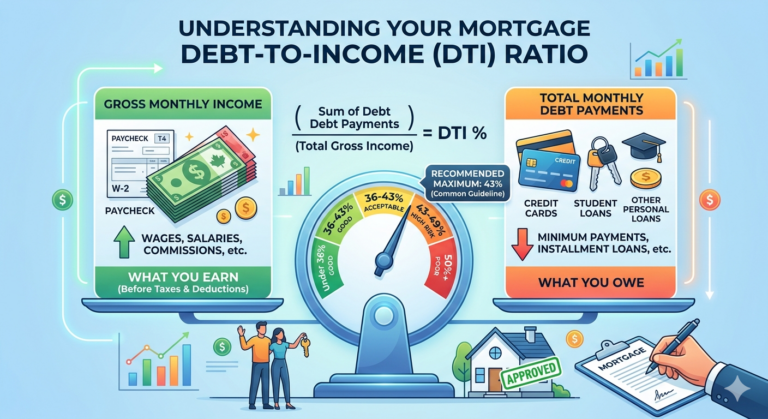
- Debt-to-Income (DTI) Ratio: This ratio compares your total monthly debt payments (including the proposed mortgage) to your gross monthly income. Most lenders prefer a DTI ratio below 43%, though some programs allow higher. You can calculate your potential ratio with our free [DTI calculator](/dti-calculator-2025/).
- Household Size: Some programs consider the number of people in your household when determining income eligibility, as larger families may have higher needs.
The key takeaway is that having a lower income doesn’t automatically disqualify you from buying a home. It simply means you’ll likely need to explore specific government-backed or income-restricted loan programs designed to support affordability.
Top Affordable Home Loan Programs for Low-Income Buyers
Several primary mortgage programs are structured to assist buyers with lower incomes by reducing common barriers to homeownership, such as large down payments or stringent credit requirements.
1. FHA Loans (Federal Housing Administration)
FHA loans are insured by the Federal Housing Administration, making them a popular choice for first-time buyers and those with limited funds or less-than-perfect credit. The FHA does not directly lend money; instead, it insures loans made by approved lenders.
Key Features for Low-Income Buyers:
- Low Down Payment: You can qualify with as little as a 3.5% down payment. For a $250,000 home, this is just $8,750.
- Flexible Credit Requirements: Minimum credit scores typically start at 580 FICO for the 3.5% down payment. Some lenders may accept scores as low as 500 with a 10% down payment, though this is less common.
- Higher DTI Ratios: FHA often allows DTI ratios up to 50-57% in some cases, providing more flexibility than conventional loans.
- Income Limits: While FHA loans don’t have strict income caps like some other programs, they do have loan limits that vary by county. For 2026, the FHA “floor” loan limit for a single-family home in most areas is projected to be around $498,257, with higher “ceiling” limits in high-cost areas, reaching up to approximately $1,149,825. This ensures the loans target moderately priced homes.
Considerations:
- Mortgage Insurance Premium (MIP): FHA loans require both an Upfront Mortgage Insurance Premium (UFMIP) and an annual MIP, which can increase your monthly payment. UFMIP is typically 1.75% of the loan amount, and annual MIP ranges from 0.45% to 1.05% depending on loan term and LTV (loan-to-value). Unlike private mortgage insurance (PMI) on conventional loans, annual MIP generally remains for the life of the loan if your down payment was less than 10%.
- Property Requirements: Homes financed with FHA loans must meet certain minimum property standards.
2. VA Loans (Department of Veterans Affairs)
VA loans are an incredible benefit for eligible service members, veterans, and surviving spouses. These loans are guaranteed by the Department of Veterans Affairs and are among the most powerful tools for affordable homeownership.
Key Features for Low-Income Buyers (Veterans):
- 0% Down Payment: No down payment is required for eligible borrowers, eliminating a major hurdle for many low-income individuals.
- No Private Mortgage Insurance (PMI): Unlike FHA or conventional loans with low down payments, VA loans do not require PMI, significantly reducing monthly housing costs.
- Competitive Interest Rates: VA loans often come with lower interest rates compared to other loan types due to the government guarantee.
- Flexible Credit Standards: While the VA itself doesn’t set a minimum credit score, most lenders require a FICO score of at least 620.
- Limited Closing Costs: The VA limits the closing costs lenders can charge to veterans.
- No Loan Limits (for full entitlement): For eligible veterans with full entitlement, there are no VA loan limits, meaning you can borrow as much as a lender will approve without a down payment, provided you meet their qualification criteria.
Considerations:
- VA Funding Fee: Most VA borrowers pay a funding fee, a one-time charge ranging from 1.25% to 3.6% of the loan amount, depending on service history and whether it’s a first-time use. This fee can often be financed into the loan. Veterans receiving VA compensation for service-connected disabilities are exempt from the funding fee.
- Eligibility: Only eligible service members, veterans, and qualifying spouses can use this program.
3. USDA Rural Development Loans (United States Department of Agriculture)
USDA loans are designed to promote homeownership in rural and eligible suburban areas across the country. They are guaranteed by the U.S. Department of Agriculture.
Key Features for Low-Income Buyers:
- 0% Down Payment: Similar to VA loans, eligible borrowers can purchase a home with no down payment.
- Competitive Interest Rates: USDA loans also tend to offer favorable interest rates.
- Flexible Credit Requirements: Lenders typically look for a FICO score of 640 or higher, though exceptions can be made for strong compensating factors.
- Income Limits: This is a crucial aspect for low-income buyers. Household income must not exceed 115% of the Area Median Income (AMI) for the specific rural area, adjusted for household size. These limits ensure the program targets those truly needing assistance.
- Geographic Restrictions: The property must be located in an eligible rural area as defined by the USDA. Many seemingly suburban areas actually qualify.
Considerations:
- Annual Guarantee Fee: USDA loans require an upfront guarantee fee (currently 1% of the loan amount) and an annual fee (currently 0.35% of the outstanding principal balance). These are similar to FHA’s MIP.
- Property Eligibility: The home must be located in a USDA-eligible area, which can be checked on the USDA’s website.
4. Conventional Loans with Low Down Payment Options (Fannie Mae & Freddie Mac)
While conventional loans (not backed by the government) typically require a 5% or 20% down payment, Fannie Mae and Freddie Mac, government-sponsored enterprises, offer specific programs with lower down payment requirements and income limits for eligible buyers.
a. Fannie Mae HomeReady Loan:
- 3% Down Payment: Allows for a very low down payment.
- Income Limits: Requires borrower income to be at or below 80% of the Area Median Income (AMI) for the property’s location.
- Flexible Income Sources: Considers various income sources, including rental income from accessory dwelling units (ADUs) and boarder income.
- Credit Score: Generally requires a minimum FICO score of 620.
- Mortgage Insurance (PMI): PMI is required but can be canceled once you reach 20% equity, unlike FHA MIP in most cases.
b. Freddie Mac Home Possible Loan:
- 3% Down Payment: Similar to HomeReady, offering a minimal initial investment.
- Income Limits: Also targets borrowers with incomes at or below 80% of the AMI.
- Flexible Down Payment Sources: Down payment can come from various sources, including gifts, grants, and employer assistance.
- Credit Score: Typically requires a FICO score of 620 or higher.
- Mortgage Insurance (PMI): PMI is required and can be canceled once sufficient equity is achieved.
Considerations for HomeReady/Home Possible:
- Homebuyer Education: May require completion of a homebuyer education course.
- PMI: While cancellable, PMI adds to your monthly cost until you reach 20% equity.
5. Down Payment Assistance (DPA) Programs
Many state and local housing finance agencies (HFAs), as well as some non-profit organizations, offer down payment assistance programs. These programs can be combined with FHA, VA, USDA, or conventional low-down payment loans, often significantly reducing or even eliminating your out-of-pocket costs.
Types of DPA:
- Grants: Funds that do not need to be repaid.
- Forgivable Loans: Loans that are forgiven after a certain period (e.g., 5-10 years) if you remain in the home.
- Deferred Loans: Loans with no monthly payments until you sell the home, refinance, or pay off your primary mortgage.
- Repayable Loans: Low-interest loans that require repayment, often with deferred payments.
Key Features for Low-Income Buyers:
- Reduced Out-of-Pocket Costs: DPA can cover your down payment, closing costs, or both, making homeownership much more attainable.
- Income Limits: DPA programs almost always have specific income limits, usually tied to AMI.
- First-Time Buyer Requirements: Many DPA programs are specifically for first-time homebuyers (typically defined as someone who hasn’t owned a home in the past three years).
- Location-Specific: Eligibility varies greatly by state, county, and city. For instance, if you’re looking in Texas, you’d want to research [best mortgage lenders in Texas 2025](/best-mortgage-lenders-in-texas-2025/) that offer DPA programs.
Considerations:
- Additional Paperwork: DPA programs often involve extra application steps and documentation.
- Higher Interest Rates: Sometimes, loans combined with DPA might have slightly higher interest rates than stand-alone loans.
- Program Availability: Funds can be limited, and programs change frequently.

How Low-Income Buyers Actually Qualify: The Math and Realities
Qualifying for a mortgage, regardless of income level, revolves around three core pillars: income, credit, and debt. For low-income buyers, understanding how these interrelate with specific program rules is crucial.
Income and Debt-to-Income (DTI) Ratio
Lenders look at your stable, verifiable income to determine how much you can afford to borrow. This includes wages, salaries, certain public assistance, retirement income, and even some non-taxable income (which can sometimes be “grossed up” for qualification purposes).
The DTI ratio is paramount. It’s calculated by dividing your total monthly debt payments (including the new mortgage payment, property taxes, homeowner’s insurance, and HOA fees) by your gross monthly income.
Example Scenario for an FHA Loan:
Let’s say a low-income buyer has:
- Gross Monthly Income: $3,500
- Existing Monthly Debts: $300 (car payment, credit card minimums)
- Proposed New Mortgage Payment (PITI – Principal, Interest, Taxes, Insurance) + FHA MIP: $1,350
1. Calculate Total Monthly Debts: $300 (existing) + $1,350 (new mortgage) = $1,650
2. Calculate DTI Ratio: ($1,650 / $3,500) * 100% = 47.14%
With an FHA loan, a 47.14% DTI ratio could be acceptable, especially if the borrower has strong compensating factors like a good credit score, stable job history, or cash reserves. For conventional loans, this DTI might be pushing the limits. Our [affordability calculator](/affordability-calculator-2025/) can help you estimate what you might qualify for.
Credit Score Requirements
While low-income programs offer more flexibility, a good credit score is still vital. It demonstrates your reliability in managing debt.
- Higher Score = Better Terms: Even if a program allows a 580 FICO, a score of 680 or higher will often unlock lower interest rates and potentially broader lender options.
- Credit History: Lenders will review your payment history, the types of credit you have, and how much credit you’re using.
- Addressing Issues: If you have credit challenges, taking steps to improve your score before applying is a smart move. This might involve paying down debts, disputing errors on your credit report, and avoiding new credit inquiries.
Down Payment and Closing Costs
While the programs listed significantly reduce down payment requirements, low-income buyers must also plan for closing costs. These are fees associated with finalizing your mortgage, typically ranging from 2% to 5% of the loan amount.
- Sources of Funds: Down payment and closing costs can come from personal savings, gifts from family, employer assistance, and, crucially, down payment assistance programs.
- Seller Concessions: In some cases, sellers may agree to pay a portion of the buyer’s closing costs, which can be negotiated. FHA, VA, and USDA loans have limits on how much a seller can contribute.
Finding Mortgage Lenders for Low-Income Buyers
Not all lenders specialize in every type of loan program. To maximize your chances of success, it’s important to seek out lenders who are experienced with the specific affordable programs you qualify for.
Types of Lenders to Consider:
- Large National Banks: Many major banks (e.g., Chase, Wells Fargo, Bank of America) offer FHA, VA, and conventional loans, including HomeReady/Home Possible. They may have specific DPA partnerships.
- Credit Unions: Often known for their community focus and competitive rates, credit unions can be excellent sources for FHA, VA, and USDA loans, and they sometimes have their own unique low-income programs.
- Local Mortgage Brokers: A mortgage broker works with multiple lenders. They can be invaluable for low-income buyers because they can shop around to find the best rates and programs, including less common DPA options or niche lenders specializing in credit challenges. For unique situations, [private mortgage lenders](/private-mortgage-lenders-a-smart-alternative-to-traditional-banks/) might also be explored, though typically at higher rates.
- Community Development Financial Institutions (CDFIs): These are specialized financial institutions that serve economically disadvantaged communities and often have unique loan products and counseling services for low-income buyers.
Questions to Ask Potential Lenders:
When interviewing lenders, be direct about your situation and ask specific questions:
- “Are you experienced with FHA/VA/USDA loans?”
- “Do you offer Fannie Mae HomeReady or Freddie Mac Home Possible loans?”
- “What down payment assistance programs do you work with in my area/state?”
- “What are your minimum credit score requirements for these programs?”
- “Can you provide a loan estimate based on my income and estimated down payment?”
- “What is your typical DTI limit for the programs I might qualify for?”
- “What fees do you charge for these types of loans?”
Use our [Mortgage rate comparison tool](/mortgage-rate-comparison-tool-2025/) to compare offers from multiple lenders once you’ve been pre-approved.
Alternatives and Strategies for Low-Income Buyers
If direct homeownership isn’t immediately feasible, several strategies can help you prepare and improve your future prospects.
1. Housing Counseling Agencies
HUD-approved housing counseling agencies offer free or low-cost services, including:
- Pre-purchase Education: Guidance on budgeting, credit repair, and understanding the homebuying process.
- Down Payment Assistance Guidance: They can often connect you with local DPA programs you might not find otherwise.
- Foreclosure Prevention: If you’re struggling, they can offer assistance to keep your home.
These counselors are a fantastic, unbiased resource for low-income buyers navigating complex programs.
2. Improve Your Credit Score
A higher credit score opens more doors and secures better interest rates, ultimately reducing your monthly payment.
- Pay Bills On Time: This is the most significant factor.
- Reduce Credit Card Debt: Keep credit utilization low (below 30% is ideal).
- Check Your Credit Report: Dispute any errors with all three major credit bureaus.
3. Save for a Down Payment & Reserves
Even with 0% or 3% down programs, having some savings is beneficial for closing costs, moving expenses, and an emergency fund for home repairs.
- Automatic Savings: Set up automatic transfers from your checking to a dedicated savings account.
- Budgeting: Create a realistic budget to identify areas where you can cut expenses and save more.
4. Explore Rent-to-Own Programs
Some programs allow you to rent a home with an option to purchase it later, with a portion of your rent often going toward a down payment. This can give you time to build credit and save.
5. Consider a Multi-Unit Property
If you’re comfortable being a landlord, purchasing a duplex, triplex, or quadplex with an FHA loan (up to four units) can be a smart move. You live in one unit, and the rental income from the others can help you qualify for a larger loan and offset your mortgage payments.

Who Should NOT Pursue Homeownership Right Now
While homeownership is a rewarding goal, it’s not always the right move for everyone, especially if certain foundational elements aren’t in place.
- Unstable Employment: If your job security is low or your income is highly inconsistent, meeting regular mortgage payments can be extremely stressful and risky. Lenders look for stable, verifiable income.
- Overwhelming Existing Debt: If your DTI ratio is already very high (e.g., above 50% from non-housing debt), adding a mortgage will likely lead to financial strain or outright loan denial. Prioritizing debt reduction is crucial.
- No Emergency Savings: Homes come with unexpected costs (repairs, maintenance). Without an emergency fund (ideally 3-6 months of living expenses), a sudden issue could quickly lead to financial distress.
- Poor Credit History with No Plan for Improvement: While low-income programs are more flexible, a severely damaged credit history (multiple bankruptcies, foreclosures, or persistent late payments) will still make qualification challenging or result in very unfavorable terms. If you’re not actively working to rebuild credit, waiting might be wiser.
- No Long-Term Plans for the Area: If you anticipate moving within 2-3 years, the transaction costs of buying and selling (closing costs, realtor fees) might outweigh any equity gained, making renting a more financially sound choice.
For those in these situations, focusing on financial stability, credit improvement, and savings first can pave a much smoother path to homeownership later. Our [loan eligibility checker](/loan-eligibility-checker-tool-2025/) can give you a preliminary idea of what you might qualify for.
Final Thoughts on Achieving Homeownership
Don’t let a lower income deter your dream of homeownership. The landscape of mortgage lending is diverse, with numerous programs specifically designed to support individuals and families in varying financial situations. The key is to:
1. Educate Yourself: Understand the programs available.
2. Prepare Your Finances: Work on credit and savings.
3. Find the Right Lender: Seek out professionals experienced with affordable housing loans.
Begin your journey today by exploring the tools and guides available on MortgageTune.com, from our comprehensive [Mortgage Calculator] (/mortgage-calculator-2025/) to our [Blogs Hub] (/blogs/) for deeper insights. Homeownership is within reach with the right information and strategy.
This article is for informational purposes only and does not constitute financial or legal advice. Mortgage rates, loan limits, and program requirements change frequently. Always consult a licensed mortgage professional and verify current rates directly with lenders before making any financial decisions.