FHA Mortgage Lenders in FHA Mortgage Lenders For Low Down Payment In Cincinnati Ohio: Low Down Payment Options 2026
For many aspiring homeowners in Cincinnati, Ohio, finding an affordable path to homeownership often hinges on the down payment. The Federal Housing Administration (FHA) loan program offers a vital solution, allowing eligible buyers to purchase a home with a significantly lower initial investment compared to conventional mortgages. As you explore the vibrant neighborhoods from Over-the-Rhine to Hyde Park, understanding FHA options and connecting with the right lenders is your first crucial step.
This guide is designed for Cincinnati residents — including first-time buyers, veterans, and those with moderate credit scores — who are looking for low down payment options in 2026. We’ll explore how FHA loans work in the Queen City, outline key requirements, highlight potential local assistance programs, and help you understand how to choose a lender that aligns with your specific needs. While we won’t recommend specific lenders, we’ll discuss the types of lenders commonly serving this market and how to evaluate them.
Disclaimer: mortgagetune.com is an independent resource providing educational content. We are not a mortgage lender, broker, or financial advisor. The information provided here is for general informational purposes only and does not constitute financial or professional advice. Always consult with a qualified financial professional or licensed mortgage lender to discuss your specific situation. Loan terms, interest rates, and program availability are subject to change and depend on individual borrower qualifications.
Why Choose FHA Loans for Low Down Payments in Cincinnati?
FHA loans are government-insured mortgages designed to make homeownership more accessible, particularly for those who may not qualify for conventional loans due to lower credit scores or limited savings for a down payment. For Cincinnati buyers, these loans offer several compelling advantages:
- Low Down Payment Requirement: The most significant benefit is the minimum 3.5% down payment for borrowers with a credit score of 580 or higher. For a home priced at $250,000, this means a down payment of just $8,750, making homeownership far more attainable than the typical 5% to 20% required by conventional loans.
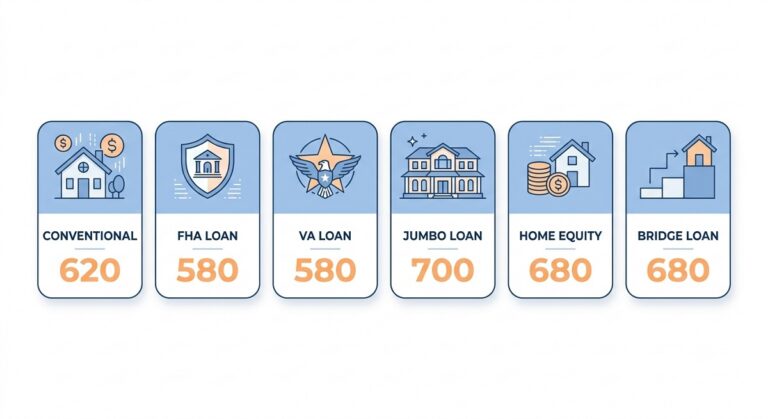
- Flexible Credit Score Criteria: FHA guidelines are more lenient than conventional loans. While a 3.5% down payment generally requires a credit score of 580 or above, some lenders may approve borrowers with scores as low as 500, though this would typically require a higher 10% down payment. Many conventional loans demand a minimum credit score of 620 or higher.
- Competitive Interest Rates: Because the FHA insures these loans, lenders often view them as less risky, which can translate into more favorable interest rates for borrowers.
- Easier Qualification After Financial Hardship: For those who have experienced past financial challenges like bankruptcy or foreclosure, FHA loans often have shorter waiting periods before eligibility compared to conventional mortgages.
- High Debt-to-Income (DTI) Ratios Accepted: While lenders prefer a DTI ratio (Debt-to-Income ratio – the percentage of your gross monthly income that goes towards debt payments) below 43%, FHA loans can sometimes allow higher ratios, up to 50% in certain cases, if the borrower has strong compensating factors like significant cash reserves or a history of on-time payments. You can get a clearer picture of your own DTI with our DTI calculator.
Cincinnati’s housing market, like many across the US, has seen fluctuations, making these flexible FHA options especially valuable. The ability to enter the market with a smaller upfront cost can be a powerful tool for building equity and long-term financial stability in the Queen City.
Understanding FHA Loan Limits in Cincinnati, Ohio for 2026
FHA loan limits dictate the maximum amount you can borrow with an FHA-insured mortgage. These limits vary by county and are determined annually by the Federal Housing Administration based on median home prices. They ensure FHA loans primarily support moderate-income housing.
For 2026, it is estimated that the FHA loan limit for a single-family home in Hamilton County, Ohio (which includes Cincinnati), will be approximately $520,900. This figure is an estimate based on recent trends and is subject to official HUD announcements for the 2026 calendar year. Multi-unit properties (duplexes, triplexes, and fourplexes) have higher estimated limits:
- Single-Family Home: ~$520,900
- Duplex: ~$666,750
- Triplex: ~$805,950
- Fourplex: ~$1,001,700
These limits are crucial because if a home you’re interested in exceeds the FHA limit for Hamilton County, you would need to explore alternative financing options, such as a conventional loan or a jumbo loan. Most homes in the greater Cincinnati area fall comfortably within these FHA limits, making a wide range of properties accessible. It’s always wise to confirm the exact limits with a lender as they are officially announced for the year you plan to purchase.

Top FHA Mortgage Lender Types Serving Cincinnati Borrowers
While mortgagetune.com does not endorse specific lenders, understanding the different types of FHA-approved lenders operating in the Cincinnati market can help you narrow down your search. Each type offers a distinct approach to the mortgage process.
National Lenders with Strong Cincinnati Presence
Many large national banks and non-bank mortgage companies are FHA-approved and have a significant presence in Cincinnati. These lenders often offer:
- Extensive Resources: Large operations often mean advanced online application portals, dedicated loan officers, and robust customer service departments.
- Streamlined Processes: They may have highly efficient systems for processing FHA loans due to their high volume.
- Competitive Rates: Their large scale can sometimes allow them to offer very competitive interest rates, which you can compare using our rate comparison tool.
Examples of such lenders (without endorsement) would include major banks with nationwide branches or large online-focused mortgage companies. They are often a good choice for borrowers comfortable with a more digital or structured application process.
Local Cincinnati Banks and Credit Unions
Cincinnati boasts a variety of local banks and credit unions that are FHA-approved. These institutions often provide:
- Personalized Service: As community-focused entities, they may offer a more tailored and one-on-one experience, understanding the nuances of the local Cincinnati real estate market.
- Local Expertise: Loan officers often have deep knowledge of specific Cincinnati neighborhoods, local real estate trends, and regional down payment assistance programs.
- Relationship Banking: For those who prefer to keep all their financial products with one institution, a local bank or credit union can be an excellent option.
These can be particularly appealing if you value in-person consultations and a lender who truly understands the Cincinnati community.
Mortgage Brokers Specializing in FHA Loans
A mortgage broker acts as an intermediary, working with multiple different lenders to find the best loan product for your situation. For FHA loans in Cincinnati, a broker can be invaluable because they:
- Access Multiple Lenders: They can shop around on your behalf, comparing FHA loan offers from various banks, credit unions, and non-bank lenders without you having to apply individually to each. This increases your chances of finding the most favorable terms and rates.
- Expert Guidance: Many brokers specialize in FHA loans and can guide you through the specific requirements and paperwork, ensuring a smooth process.
- Problem Solvers: If your financial situation is complex, a skilled broker can often find a lender willing to work with your specific circumstances.
Using a mortgage broker can save you time and potentially money by finding a loan that fits your needs precisely, including those seeking the lowest possible down payment.
Lenders Actively Offering Down Payment Assistance (DPA) Programs
Some FHA-approved lenders are particularly active in offering or partnering with down payment assistance (DPA) programs. These programs are often state or local initiatives designed to help reduce the upfront costs of homeownership.
- Integrated Solutions: These lenders are well-versed in combining FHA loans with DPA programs, ensuring a seamless application process for both.
- Knowledge of Specific Programs: They can advise you on eligibility for various programs available in Ohio and Cincinnati, such as those offered through the Ohio Housing Finance Agency (OHFA).
If you anticipate needing assistance with your down payment or closing costs, identifying lenders with strong DPA program expertise is a wise strategy.
When researching any type of lender, always look for transparency in fees, clear communication, positive customer reviews, and a proven track record with FHA loans.
Navigating FHA Loan Requirements in Cincinnati
Qualifying for an FHA loan involves meeting specific criteria set by the FHA and individual lender overlays (additional requirements set by the lender). Here’s a breakdown of the key requirements Cincinnati borrowers need to know:
Down Payment
The cornerstone of FHA loans for low down payment buyers is the minimum 3.5% down payment. This applies to borrowers with a qualifying credit score of 580 or higher. If your credit score falls between 500 and 579, a 10% down payment is typically required. Unlike conventional loans, the FHA allows your down payment to come from various sources, including:
- Personal Savings: Money you’ve saved yourself.
- Gift Funds: Funds from a family member, employer, or charitable organization. These funds must be properly documented.
- Down Payment Assistance Programs: Grants or second mortgages provided by state or local housing agencies (discussed further below).
Credit Score
While the FHA officially allows credit scores as low as 500, most FHA-approved lenders in Cincinnati will have their own minimum credit score requirements, often referred to as “overlays.”
- 580+ Credit Score: Generally qualifies for the 3.5% down payment.
- 500-579 Credit Score: Typically requires a 10% down payment. Many lenders, however, prefer a minimum of 620 or even 640, especially for the 3.5% option, due to their own risk assessments.
It’s crucial to check your credit score and understand that even with an FHA loan, a higher score will give you access to more lenders and potentially better interest rates. Use our loan eligibility checker to get an initial idea of where you stand.
Debt-to-Income (DTI) Ratio
Your DTI ratio measures your gross monthly income against your total monthly debt payments. FHA guidelines are generally more flexible than conventional loans, often allowing:
- Front-End DTI (Housing Ratio): Your monthly housing payment (mortgage principal and interest, property taxes, homeowner’s insurance, FHA mortgage insurance premium, and HOA fees) should ideally be no more than 31% of your gross monthly income.
- Back-End DTI (Total Debt Ratio): Your total monthly debt payments (including housing costs, car payments, student loans, credit card minimums) should ideally be no more than 43% of your gross monthly income.
However, with strong compensating factors—such as significant cash reserves, a high credit score, or a history of making larger down payments—FHA lenders can sometimes approve DTI ratios up to 50% or even slightly higher. This flexibility is a major advantage for some Cincinnati buyers, but it’s important to demonstrate stability and reliability in your finances.
Property Requirements
The home you purchase with an FHA loan must meet specific property standards set by the Department of Housing and Urban Development (HUD). An FHA appraisal (a home valuation that also checks for health and safety issues) will ensure the property is:
- Safe: Free from health and safety hazards.
- Sound: Structurally intact and well-maintained.
- Secure: Protects the occupants from the elements and provides a stable living environment.
These requirements mean FHA loans are typically used for primary residences and may not be suitable for fixer-uppers unless the seller is willing to make necessary repairs before closing, or if you plan to use an FHA 203(k) rehabilitation loan.
Mortgage Insurance Premium (MIP)
A significant component of FHA loans is the Mortgage Insurance Premium (MIP). This insurance protects the lender in case you default on your loan. MIP consists of two parts:
- Upfront Mortgage Insurance Premium (UFMIP): A one-time payment equal to 1.75% of the loan amount, typically financed into your mortgage.
- Annual Mortgage Insurance Premium (Annual MIP): An ongoing monthly premium that varies based on your loan amount, loan term, and initial loan-to-value (LTV) ratio. For most FHA loans with a 3.5% down payment, this annual MIP will be 0.55% of the outstanding loan balance for loans originated in 2026 and will generally remain for the life of the loan.
The presence of MIP can increase your monthly housing costs, which is an important factor to consider when calculating your overall Affordability Calculator 2025 .
Cincinnati Down Payment Assistance (DPA) Programs for FHA Buyers
For Cincinnati residents, combining an FHA loan with a down payment assistance (DPA) program can be a powerful strategy to reduce upfront costs even further, sometimes bringing your out-of-pocket expenses close to zero. These programs are typically offered by state and local housing finance agencies.
Ohio Housing Finance Agency (OHFA) Programs
The Ohio Housing Finance Agency (OHFA) offers several popular statewide programs that are frequently used by FHA borrowers in Cincinnati:
- Grants for Grads: This program is specifically designed for recent college graduates. It offers down payment assistance (DPA) in the form of a non-repayable grant, often 2.5% or 5% of the home’s purchase price, paired with an OHFA FHA first mortgage. To qualify, you typically need to have graduated within the last 48 months, have a minimum credit score of 640, and meet income limits.
- YourChoice! Down Payment Assistance: This program offers DPA as a second mortgage equal to 2.5% or 5% of the home’s purchase price. This second mortgage is typically forgiven after seven years as long as you remain in the home and make all your payments on time. It can be paired with an OHFA FHA first mortgage. Eligibility generally requires a minimum credit score of 640 and meeting specific income and purchase price limits.
- Ohio Heroes Program: This program provides a discounted interest rate on an FHA first mortgage and can be combined with other OHFA DPA options. It’s available to eligible public servants, including active military personnel, veterans, police officers, firefighters, EMTs, teachers, and healthcare workers.
- Next Home Program: A general program providing DPA to eligible first-time and repeat homebuyers across Ohio, often offering a percentage of the purchase price towards down payment or closing costs. This can also be combined with an FHA first mortgage.
These OHFA programs are dynamic, with requirements and benefits that can change. Many FHA-approved lenders in Cincinnati are familiar with and participate in OHFA programs. It’s important to discuss these options with your chosen lender to see which, if any, you qualify for.
Local Cincinnati and Hamilton County Programs
Beyond statewide initiatives, some local municipalities or non-profit organizations in the Cincinnati area may offer their own targeted DPA programs. These are often smaller in scale and more localized, providing assistance to buyers within specific city limits or neighborhoods. For example, the City of Cincinnati may occasionally have initiatives, or local community development corporations might offer specific programs for revitalizing certain areas.
To find current local programs, it’s recommended to:
- Check with the City of Cincinnati’s Department of Community Development.
- Contact local non-profit housing agencies or community development corporations in your target neighborhoods.
- Ask FHA-approved lenders if they are aware of or participate in any active local Cincinnati DPA programs.
Combining an FHA loan with DPA can significantly reduce your out-of-pocket expenses, making homeownership a reality even with limited savings. Remember, these programs often have their own set of eligibility criteria regarding income, credit score, and property location, which must be met in addition to FHA requirements.
Common Mistakes to Avoid When Getting an FHA Loan in Cincinnati
While FHA loans offer an accessible path to homeownership, certain missteps can delay your application or even lead to denial. Being aware of these common mistakes can help Cincinnati borrowers navigate the process more smoothly:
- Not Comparing Lenders Thoroughly: Many borrowers assume all FHA loans are the same. While the core guidelines come from the FHA, lenders can set their own interest rates, fees, and “overlays” (additional requirements). Failing to compare at least three to five FHA-approved lenders means you might miss out on better terms, lower interest rates, or more suitable service. Use our mortgage rate comparison tool 2025 to facilitate this crucial step.
- Ignoring Your Debt-to-Income (DTI) Ratio: Even with FHA’s flexibility, a high DTI ratio is a common reason for denial. Accumulating new debt, such as buying a new car or furniture, between pre-approval and closing can push your DTI past acceptable limits. Keep your DTI low and stable. Our DTI Calculator 2025 can help you assess your current situation.
- Underestimating Closing Costs: While FHA loans offer low down payments, closing costs can still amount to 2% to 5% of the loan amount. These include appraisal fees, title insurance, loan origination fees, and more. Don’t forget to factor these into your budget. FHA allows sellers to contribute up to 6% of the sales price towards closing costs, which can be a valuable negotiation point.
- Not Understanding Mortgage Insurance Premiums (MIP): FHA loans come with both upfront (UFMIP) and annual (Annual MIP) mortgage insurance. Many borrowers overlook how significantly this adds to their monthly payment and the total cost of the loan over time. Unlike conventional PMI (Private Mortgage Insurance), FHA’s annual MIP typically lasts for the life of the loan if you put down less than 10%.
- Making Large Purchases or Opening New Credit: Any significant financial change during the loan process—from opening a new credit card to taking out a new loan—can drastically alter your credit profile and DTI, potentially jeopardizing your approval. Avoid these actions until after your loan closes.
- Not Getting Pre-Approved: A pre-approval letter from an FHA lender demonstrates to sellers that you are a serious and qualified buyer. In a competitive Cincinnati market, not having one can put you at a disadvantage, as sellers may prefer offers from pre-approved buyers.
- Failing to Disclose Financial History: Trying to hide past financial issues like bankruptcies, foreclosures, or outstanding debts will only lead to problems later in the process. Be transparent with your lender from the start, as they will uncover all relevant financial history during underwriting.
By being diligent and informed, you can avoid these common pitfalls and enjoy a smoother path to homeownership in Cincinnati.
Who Should NOT Pursue an FHA Loan for a Low Down Payment?
While FHA loans are excellent for many Cincinnati homebuyers, they are not the ideal solution for everyone. Understanding the drawbacks is just as important as knowing the benefits. You might want to consider alternative financing if:
- You Have Excellent Credit and Substantial Down Payment Savings: If your credit score is 720 or higher and you have 10-20% or more saved for a down payment, a conventional loan might be a more cost-effective choice. Conventional loans typically do not require lifelong mortgage insurance if you put down 20% or more. If you put down less than 20%, you’ll pay private mortgage insurance (PMI), but PMI can eventually be canceled once you reach 20% equity, unlike FHA’s annual MIP which often lasts for the life of the loan.
- You Are Buying a High-End Luxury Home: FHA loan limits for Hamilton County (estimated around $520,900 for a single-family home in 2026) might restrict your options if you’re looking for a property significantly above this threshold. For homes exceeding FHA limits, you would need a conventional or jumbo loan.
- You Prefer to Avoid Mortgage Insurance Entirely (or long-term): As mentioned, FHA loans come with both an upfront and an annual mortgage insurance premium (MIP) that, for most low down payment loans, lasts for the entire loan term. If paying mortgage insurance is a deal-breaker, or if you want the option to cancel it down the line, a conventional loan with a 20% down payment (or eventual equity gain) is preferable.
- You Are Purchasing an Investment Property or Vacation Home: FHA loans are strictly for primary residences and cannot be used to purchase investment properties, vacation homes, or secondary residences. If your goal is real estate investment, you’ll need to explore different loan products.
- You Are Looking for a “Fixer-Upper” That Requires Significant Structural Repairs: While FHA 203(k) renovation loans exist, a standard FHA loan requires the property to meet specific health and safety standards. If a home needs major structural work, has lead paint, or other significant deficiencies, it might not pass the FHA appraisal unless the seller agrees to complete repairs before closing, or you pursue a more complex FHA 203(k) loan.
- You Have a Very Low Debt-to-Income Ratio and Seek Minimal Scrutiny: While FHA loans are flexible, their DTI review can be thorough. If you have a very strong financial profile, a conventional loan might offer a slightly quicker or less detailed underwriting process regarding income and debt analysis.
Before committing to an FHA loan, carefully weigh these factors against your financial situation and homeownership goals. Sometimes, a conventional loan or other options might align better with your long-term plans.
How to Choose the Best FHA Lender in Cincinnati
Selecting the right FHA lender in Cincinnati is a critical decision that can impact your homebuying experience, from the rates you secure to the speed of your closing. Here’s a structured approach to finding the best fit for your needs:
1. Compare FHA Rates and Fees: This is arguably the most important step. Don’t just look at the interest rate. Request a Loan Estimate (a standardized form lenders must provide) from multiple lenders. Pay close attention to:
- Interest Rate: The annual percentage charged on the borrowed money.
- APR (Annual Percentage Rate): A broader measure of the cost of your mortgage, including interest and most fees.
- Origination Fees: Charges for processing the loan.
- Other Closing Costs: Appraisal fees, title insurance, attorney fees, etc.
- Mortgage Insurance Premium (MIP): Confirm the upfront and annual MIP percentages and how they are calculated.
2. Evaluate Lender Experience with FHA Loans: Not all lenders are equally proficient with FHA loans. Choose a lender or loan officer who regularly closes FHA mortgages and understands the specific nuances, paperwork, and appraisal requirements. An experienced FHA lender can anticipate potential issues and guide you through the process more efficiently. Ask about their average FHA closing times.
3. Assess Customer Service and Communication: The mortgage process can be complex. You need a lender who is responsive, transparent, and easy to communicate with.
- Read Reviews: Look at online reviews on platforms like Google, Yelp, and the Better Business Bureau. Pay attention to comments about communication, efficiency, and how issues were handled.
- Test Their Responsiveness: How quickly do they respond to your initial inquiries? Are they clear and patient in explaining terms and processes?
4. Check for Down Payment Assistance (DPA) Program Participation: If you plan to use an Ohio Housing Finance Agency (OHFA) program or other local Cincinnati DPA, ensure the lender is approved to participate in those specific programs. Some lenders specialize in DPA and can provide seamless integration of these benefits.
5. Look for Local Expertise: A lender with local knowledge of the Cincinnati market can be an asset. They might have a better understanding of local property values, typical closing costs in the area, and even specific challenges that arise in certain Cincinnati neighborhoods.
6. Get a Pre-Approval: Once you’ve identified a few promising lenders, go through the pre-approval process. This not only gives you a clear picture of how much you can afford but also signals to sellers that you are a serious buyer. Use our Loan Eligibility Checker Tool 2025 to start this journey.
By taking the time to thoroughly vet potential lenders, you can find a partner who will help you achieve your dream of homeownership in Cincinnati with an FHA loan.

Your Next Steps to Homeownership in Cincinnati
Embarking on the journey to buy a home in Cincinnati with an FHA loan and a low down payment is an exciting prospect. Remember that knowledge and preparation are your strongest allies.
1. Understand Your Budget: Before anything else, get a realistic picture of what you can comfortably afford. Our Affordability Calculator 2025 can help you determine a sustainable monthly housing payment based on your income and debts.
2. Check Your Credit: Obtain your credit report and score. Address any inaccuracies and work on improving your score if needed. A higher score typically leads to better loan terms.
3. Gather Your Documents: Lenders will require financial documents such as pay stubs, W-2s, tax returns, and bank statements. Having these ready will streamline your application process.
4. Get Pre-Approved: This crucial step will give you a clear understanding of your borrowing power and make you a more attractive buyer in the competitive Cincinnati real estate market.
5. Compare Lenders: Contact several FHA-approved lenders in Cincinnati. Compare their rates, fees, customer service, and experience with FHA loans and DPA programs.
6. Explore Down Payment Assistance: Research OHFA programs and any local Cincinnati initiatives that could help reduce your out-of-pocket costs even further. Your lender can be a great resource here.
MortgageTune.com is dedicated to providing you with the tools and information you need to make informed decisions. Explore our [Blogs Hub](/blogs/) for more in-depth guides, and check out all our Mortgage Tools to assist you at every stage of your homebuying process.
This content is for informational purposes only. mortgagetune.com is not a mortgage lender, broker, or financial advisor. We do not provide personalized financial advice. Please consult with a licensed mortgage professional or financial advisor for advice tailored to your individual circumstances. Loan rates and terms are subject to change.
This article is for informational purposes only and does not constitute financial or legal advice. Mortgage rates, loan limits, and program requirements change frequently. Always consult a licensed mortgage professional and verify current rates directly with lenders before making any financial decisions.