Best Mortgage Lenders in Mortgage s That Do Not Check Bank Statements Reddit (2026): Compare Top Options
For many aspiring homeowners, the thought of traditional mortgage documentation – particularly submitting months of bank statements – can feel daunting. Whether you’re self-employed with complex finances, have significant assets outside of checking accounts, or simply prefer a less intrusive process, you might be searching for mortgage lenders that offer alternatives to standard bank statement verification. While completely “no bank statement” mortgages are exceedingly rare for primary residences, especially under strict Ability to Repay (ATR) rules (a federal regulation requiring lenders to determine if a borrower can repay their loan), there are specialized loan programs and lenders that provide flexibility.
This guide will demystify the options available in 2026, explaining how these alternative verification methods work, what qualifications you’ll need, and the specific types of lenders who offer them. We’ll help you understand if a non-traditional path is right for your home buying goals and how to navigate this unique segment of the mortgage market.
What “Not Checking Bank Statements” Really Means in Mortgage Lending
The phrase “lenders that do not check bank statements” often carries a few different interpretations, and it’s crucial to understand the nuances. In the vast majority of cases for traditional, Qualified Mortgages (QM) (loans that meet specific underwriting guidelines set by the CFPB and protect lenders from liability), lenders must verify a borrower’s income and assets to ensure they have the ability to repay the loan. This typically involves reviewing pay stubs, W-2 forms, tax returns, and, yes, bank statements.
However, when borrowers look for alternatives, they are usually seeking one of these two scenarios:
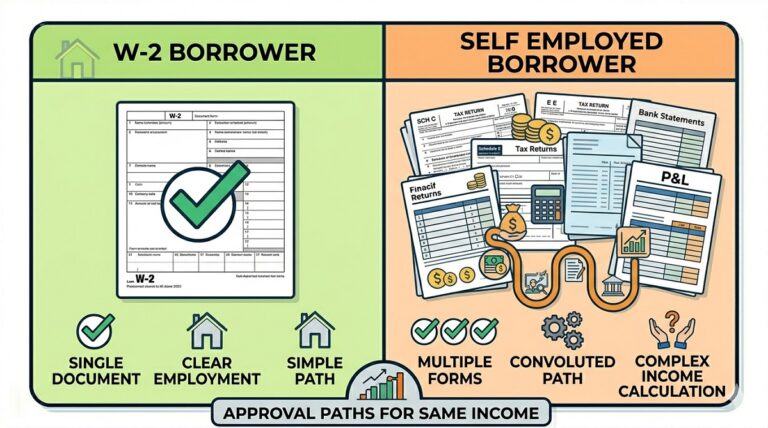
1. Alternative Income Verification (Most Common): This is the primary interpretation. Many self-employed borrowers, freelancers, or business owners struggle to prove stable income through traditional means like W-2s or conventional tax returns, which might show numerous deductions. For these individuals, lenders can use personal or business bank statements to calculate qualifying income. Here, bank statements are checked, but they serve as the method of income verification rather than a traditional income document like a pay stub. The lender analyzes deposits and often deducts a standard expense ratio to arrive at a qualifying monthly income.
2. Minimizing Asset Verification (Rare): This interpretation refers to not needing bank statements to prove you have funds for a down payment or reserves. This is much less common for primary mortgages. Even alternative loans usually require some form of asset verification, even if it’s not a standard checking or savings account. For example, a lender might verify the sale of another property, retirement accounts, or investment portfolios. True “no asset verification” loans are generally confined to specialized hard money loans for investors or situations where the loan-to-value (LTV) (the ratio of the loan amount to the value of the property) is extremely low, and the property itself serves as sufficient collateral.
It’s vital to clarify your specific need when discussing options with a potential lender or mortgage broker (a professional who helps borrowers find and apply for mortgages). Are you avoiding income verification via tax returns, or asset verification from liquid accounts? Understanding this distinction will guide you to the correct loan products.

Lenders and Loan Programs That Offer Alternatives to Traditional Bank Statement Review
While you won’t find a major bank offering a “no bank statement” conventional mortgage for a primary residence, several specialized programs and types of lenders cater to unique financial situations. These typically fall under the umbrella of Non-Qualified Mortgages (Non-QM) (loans that do not meet the strict underwriting criteria of Qualified Mortgages, offering more flexibility but often coming with higher risks and costs).
Bank Statement Loans for Self-Employed Borrowers
This is the most popular solution for those who want to avoid traditional income documentation. Instead of W-2s or tax returns, lenders analyze your business or personal bank statements to determine your qualifying income.
- How They Work: Lenders typically require 12 to 24 months of bank statements. For business bank statements, they will look at gross deposits and apply a standard “expense ratio” (e.g., 50%) to estimate your net income. For personal bank statements, they might use a percentage of all deposits as qualifying income, assuming a certain portion covers business expenses.
- Who Offers Them: These loans are primarily offered by Non-QM lenders, portfolio lenders (lenders who keep the loans they originate on their own books rather than selling them on the secondary market), and specialized mortgage brokers who have access to various non-QM programs. You might not find these at the largest conventional banks, but smaller regional banks or credit unions might have portfolio products.
- Key Requirements (General for 2026):
- Credit Score: Typically higher than traditional loans, often starting at 660-700 and above. A score of 720+ will secure better terms.
- Down Payment: Usually higher, ranging from 10% to 20% or more, depending on your credit and the lender.
- Reserves: Lenders often require significant cash reserves (e.g., 6-12 months of mortgage payments) after closing.
- Business History: You’ll typically need at least two years of self-employment documented through business licenses, tax returns (even if not used for income calculation), or professional licenses.
- Debt-to-Income (DTI) Ratio: While the income calculation is different, you’ll still need to meet DTI limits, often around 43-50%, calculated using the income derived from your bank statements. You can use our DTI calculator at /dti-calculator-2025/ to understand this better.
Asset-Depletion or Asset-Utilization Loans
These loans are designed for high-net-worth individuals who have substantial liquid assets but might have fluctuating or non-traditional income. Instead of verifying income, the lender “depletes” a portion of your verified assets over a period (e.g., 10-30 years) and counts that as your qualifying income.
- How They Work: You must have significant liquid assets in investment accounts, retirement funds, or non-retirement brokerage accounts. The lender will verify these assets (often through statements from the financial institutions) and calculate a monthly “income” amount based on a formula. For example, if you have $2,000,000 in qualifying assets, and the lender uses a 20-year depletion schedule (240 months), your qualifying income might be $8,333 per month (minus a potential discount factor or interest rate assumption).
- Who Offers Them: Again, these are specialized Non-QM lenders and private lenders (who may offer more flexible terms outside of traditional banking for a cost), often catering to jumbo loan borrowers.
- Key Requirements:
- Significant Assets: Requires substantial verifiable assets, often $500,000 to $1,000,000 or more, in eligible accounts.
- Credit Score: Typically high, often 700+.
- Down Payment: Can be standard or higher, depending on the overall financial picture.
Asset Verification: While not checking bank statements for income*, they will thoroughly verify the existence and liquidity of your other asset accounts.
Stated Income/Stated Asset (SISA) Loans (Extremely Rare)
The term “stated income” often brings to mind the pre-2008 mortgage crisis era, where borrowers could simply state their income without verification, leading to widespread fraud and defaults. Today, true “stated income, stated asset” loans are virtually non-existent for owner-occupied primary residences due to stringent post-crisis regulations (Dodd-Frank Act and Ability-to-Repay rules).
- Current Availability: If they exist at all, they are confined to highly niche private lending for non-owner-occupied investment properties, where the property’s cash flow or equity is the primary basis for the loan. These come with extremely high interest rates and fees.
- Warning: Be very wary of any lender offering a “stated income” loan for a primary residence, as it could be predatory or non-compliant.
Private Mortgage Lenders and Hard Money Loans
These are generally short-term loans provided by individuals or private companies rather than traditional banks. They are often used for investment properties, fix-and-flips, or as bridge loans, and are less common for purchasing a primary home.
- How They Work: Private lenders focus heavily on the property’s equity or collateral rather than the borrower’s income or credit score. They will still require an appraisal and evaluate the asset. While they might not scrutinize traditional bank statements for income, they might still want to see some proof of funds for the down payment or reserves.
- Who Offers Them: Various private lending firms. You can learn more about these options at /private-mortgage-lenders-a-smart-alternative-to-traditional-banks/.
- Key Requirements:
- Collateral: The property itself is the main security.
- High Interest Rates & Fees: Significantly higher than conventional mortgages.
- Short Terms: Often 6 months to 3 years.
- Lower LTV: Typically lend only 60-75% of the property’s value, requiring a substantial down payment.
How Bank Statement Loans (for Self-Employed) Work in Practice
Let’s dive deeper into the mechanics of the most common alternative: the bank statement loan for self-employed individuals. This path is popular because it allows business owners to qualify based on their real cash flow, even if their tax returns show a low adjusted gross income (AGI) due to legitimate business deductions.
Required Documentation
While you’re avoiding W-2s and tax returns for income, you’ll still need to provide a comprehensive package to demonstrate your business’s health and your ability to repay:
- Bank Statements: Typically 12 to 24 consecutive months of either personal or business bank statements. Lenders prefer statements from the same account to show consistent activity.
- Business License: Proof of active business operation for at least two years.
- Profit & Loss (P&L) Statement: An unaudited P&L statement prepared by an accountant can help clarify your business’s financial health, even if it’s not the primary income calculation tool.
- Letter from CPA: A certified public accountant (CPA) letter verifying your self-employment status and ideally supporting the income derived from bank statements.
- Articles of Incorporation/Organization: Depending on your business structure.
- Personal Financial Statement: An overview of your assets and liabilities.
- Credit Report: Lenders will pull your credit report to assess your payment history and existing debt obligations. They will look for a FICO score often above 660.
- Asset Statements: While not for income, statements for your down payment funds and reserves will still be required from the accounts where they reside.
The Income Calculation Method
This is where bank statement loans differ significantly. Lenders have various methodologies, but here are common approaches:
- Business Bank Statements:
- Gross Deposits Minus Expense Factor: The lender will sum all deposits over the 12 or 24 months. Then, they will apply an industry-standard or lender-specific expense ratio, often ranging from 40% to 70%. For example, if your business deposits $200,000 over 12 months, and the lender uses a 50% expense ratio, your annual qualifying income would be $100,000, or $8,333 per month.
- Adjusted Deposits: Some lenders may manually subtract specific recurring business expenses visible on the statements (e.g., rent, payroll) before applying a ratio.
- Personal Bank Statements:
- Percentage of Deposits: Lenders will aggregate all deposits into your personal checking or savings account. They might then count a percentage of these deposits as income, assuming a portion relates to business revenue. This method can be less precise and often comes with a more conservative percentage (e.g., 50-70% of deposits).
- Consistency is Key: Lenders look for consistent deposit activity over the review period. Large, infrequent deposits or significant transfers that aren’t clearly income-related might be excluded from the calculation.
It’s important to discuss the specific calculation method with your lender upfront to understand how your income will be assessed.

Qualification Math: Real Numbers for Non-Traditional Verification
Let’s look at a couple of examples to illustrate how income is calculated for bank statement loans and how it impacts your borrowing power.
Example 1: Self-Employed Business Owner Using Business Bank Statements
Maria owns a thriving freelance design studio. Her tax returns show an adjusted gross income of $60,000 after many business deductions. However, her business bank statements show significantly higher cash flow.
- Scenario: Maria has consistently deposited an average of $18,000 per month into her business checking account over the last 12 months.
- Lender’s Method: The lender uses a 50% expense ratio for her type of service business.
- Calculation:
Total Gross Deposits (12 months): $18,000/month 12 months = $216,000
Qualifying Income: $216,000 (1 – 0.50) = $108,000 per year
- Monthly Qualifying Income: $108,000 / 12 = $9,000 per month
With a qualifying income of $9,000 per month (or $108,000 annually), Maria can likely qualify for a much larger mortgage than she could with her $60,000 AGI from her tax returns, even if the interest rate is slightly higher. If her maximum DTI is 45%, she could have up to $4,050 in total monthly debt payments (including the new mortgage).
Example 2: High-Net-Worth Individual Using Asset Depletion
David recently sold his tech startup and has $3,500,000 in liquid investment accounts, but he is currently taking a sabbatical and has no W-2 income. He wants to buy a new home without selling off his investments to pay cash.
- Scenario: David has $3,500,000 in a diversified brokerage account.
- Lender’s Method: The lender offers an asset-depletion loan, calculating monthly income by dividing 80% of eligible assets by 240 months (20 years).
- Calculation:
Eligible Assets for Calculation: $3,500,000 0.80 = $2,800,000
- Monthly Qualifying Income: $2,800,000 / 240 months = $11,666.67 per month
David’s $11,666.67 in calculated monthly income allows him to qualify for a substantial mortgage, even without traditional employment income. The lender will still require statements for these investment accounts to verify the assets.
These examples highlight how alternative verification methods can unlock homeownership for borrowers with non-traditional financial profiles, but they always involve a clear calculation based on verifiable data, even if it’s not a standard pay stub.
The Honest Limitations and Higher Costs
While bank statement loans and other alternative verification options offer crucial flexibility, it’s essential to understand their limitations and generally higher costs compared to traditional mortgages. These are Non-QM products, meaning they fall outside the standard Qualified Mortgage rules, which allows for more underwriting flexibility but introduces higher risk for the lender.
1. Higher Interest Rates: Expect to pay an interest rate that is typically 0.5% to 2% higher than what you’d find on a conventional 30-year fixed-rate mortgage. This premium covers the increased risk the lender takes on due to the non-traditional income verification.
2. Increased Fees: You’ll likely encounter higher origination fees (the fee charged by a lender for processing a loan) and other closing costs. These can include higher underwriting fees, processing fees, and sometimes specific fees for the specialized nature of the loan.
3. Larger Down Payment Requirements: Most non-QM programs require a minimum down payment of 10-20%, with some requiring as much as 25-30%, especially for lower credit scores or higher loan amounts. This is higher than the 3-5% often seen with conventional loans, or the 3.5% for FHA loans (Federal Housing Administration loans, designed for low-to-moderate-income borrowers).
4. Stricter Credit Score Requirements: While some traditional loans can go down to a 620 FICO score, bank statement loans often require a minimum of 660-700, and borrowers with scores above 720 will secure the best terms.
5. Longer and More Complex Process: Underwriting for non-QM loans is more detailed and can take longer than a standard mortgage. The lender is meticulously analyzing bank statements, which requires more manual review than simply verifying W-2s. You’ll need to be prepared for more paperwork and potentially more back-and-forth with your loan officer.
6. Fewer Lender Options: Not all lenders offer these specialized products. You’ll need to seek out non-QM lenders, portfolio lenders, or experienced mortgage brokers. You won’t typically find these loans advertised by major national banks.
7. Potential for Prepayment Penalties: Some non-QM loans may include prepayment penalties (a fee charged if you pay off your mortgage early), though these are less common now than historically. Always review the loan terms carefully.
8. Not for Everyone: If you can qualify for a traditional mortgage with standard documentation, it’s almost always the more cost-effective option due to lower rates and fees.
These limitations highlight that while alternative verification loans are invaluable for specific borrower profiles, they come with a premium. It’s crucial to weigh the benefits of flexibility against the added costs to ensure it aligns with your long-term financial goals.
Alternatives to Avoiding Bank Statements Entirely
Before committing to a potentially more expensive bank statement loan, consider if there are other paths that might work for you. Many borrowers assume they can’t qualify conventionally, but various programs offer flexibility, even with traditional bank statement checks.
1. Traditional Loans with Careful Documentation:
FHA Loans (Federal Housing Administration): Offer low down payments (as little as 3.5%) and more flexible credit requirements (down to 580 FICO). While FHA lenders do* check bank statements, they are often more forgiving about the source of funds, allowing for gift funds from family members. Explore our FHA Loans Guide at /who-are-the-best-fha-mortgage-lenders-for-low-down-pay/.
- VA Loans (Department of Veterans Affairs): For eligible veterans, service members, and surviving spouses, VA loans offer 0% down payment and no mortgage insurance. Lenders will verify assets for reserves but are generally flexible on income stability, especially for self-employed veterans who can demonstrate consistent business income over a period. Visit VA.gov for official details.
- USDA Loans (U.S. Department of Agriculture): Offer 0% down payment for eligible rural and suburban properties for low-to-moderate-income borrowers. Like FHA and VA, they require bank statement verification but are designed to be accessible.
- Conventional Loans: Fannie Mae and Freddie Mac (government-sponsored enterprises that set guidelines for most conventional mortgages) offer programs like HomeReady and Home Possible with as little as 3% down. They verify assets, but sometimes a good explanation for certain transactions or gift letters can suffice.
- The Point: For these traditional loans, if your bank statements show your down payment funds and sufficient reserves, and your income can be verified by W-2s or well-organized tax returns, they will almost always be cheaper.
2. Co-Borrowers or Co-Signers:
- If your income or assets are borderline, adding a co-borrower (who will also live in the home and be on the title) or a co-signer (who is responsible for the loan but doesn’t necessarily live in the home) with strong income and assets can significantly boost your eligibility for a traditional loan. This means their bank statements and income would be considered.
3. Saving More for a Larger Down Payment:
- A larger down payment reduces the loan amount, which can make it easier to qualify for a traditional mortgage. Lenders see less risk when a borrower has more equity upfront. A substantial down payment also reduces your monthly mortgage payment, lowering your DTI ratio.
4. Improving Your Credit Score and Reducing Debt:
- Boosting your credit score can open doors to better conventional loan terms and even make you eligible for a wider range of lenders. Similarly, reducing your existing debt (like credit card balances or car loans) will lower your DTI ratio, making you a more attractive borrower. Use our DTI Calculator at /dti-calculator-2025/ to see how reducing debt impacts your eligibility.
5. Explore State and Local Down Payment Assistance (DPA) Programs:
- Many states and local municipalities offer programs to help with down payments and closing costs, often in the form of grants or second mortgages. These usually work with traditional FHA, VA, USDA, or conventional loans. They will still require documentation, but the assistance can reduce your out-of-pocket costs significantly.
Before jumping to a non-traditional loan, thoroughly explore all avenues for a conventional or government-backed mortgage. Their lower rates and more standardized terms often make them the most financially sound choice.
Who Should NOT Pursue Loans That Avoid Traditional Bank Statement Verification
While alternative mortgage verification methods are incredibly helpful for certain borrowers, they are not suitable for everyone. Understanding who these loans are not for can save you time, money, and potential frustration.
- Borrowers Who Can Easily Qualify for Traditional Loans: If you have stable W-2 income, well-documented tax returns, and clear bank statements that show your funds and expenses, pursuing a bank statement loan is unnecessary. Traditional mortgages (conventional, FHA, VA, USDA) offer lower interest rates, fewer fees, and a more streamlined process. Always use our loan eligibility checker at /loan-eligibility-checker-tool-2025/ first to see if you qualify for standard options.
- Borrowers Looking for the Absolute Lowest Rates and Fees: Non-QM loans inherently carry higher risk for lenders, which translates into higher interest rates and increased fees for borrowers. If your primary goal is to minimize borrowing costs, a traditional, fully documented loan is almost always the better financial choice.
- Borrowers with Limited Down Payment Funds: Alternative verification loans typically require larger down payments (10-20% or more) compared to traditional loans (which can be as low as 3-5% down, or 0% for FHA/VA/USDA). If you have minimal savings for a down payment, a bank statement loan may be out of reach.
Individuals Trying to Hide Financial Instability: These loans are designed for those with legitimate* non-traditional income or assets, not for masking financial problems. Lenders scrutinize bank statements to assess cash flow and financial health. Attempts to obscure poor spending habits, inconsistent income, or undisclosed debt will be flagged and can lead to loan denial.
- Borrowers Who Are Uncomfortable with Detailed Review of Transactions: While you’re avoiding W-2s, the bank statement loan process involves a detailed review of your bank transactions over 12-24 months. If you prefer minimal scrutiny into your day-to-day financial movements, this might not be the most comfortable path.
- Those Unfamiliar with Non-QM Loan Complexities: Non-QM loans are more specialized and have varied terms across lenders. If you prefer a straightforward, standardized process, the complexities of non-QM underwriting might be overwhelming. It requires a greater degree of engagement and understanding from the borrower.
Ultimately, loans with alternative verification methods serve a specific niche. If you fall into any of the above categories, it’s wise to explore conventional options extensively before considering these more specialized and costly alternatives.
Finding the Right Lender for Your Unique Situation
Navigating the landscape of non-traditional mortgage lending requires a strategic approach. Since major banks often stick to Qualified Mortgage guidelines, finding a lender offering bank statement loans or asset-depletion programs means knowing where to look.
1. Work with a Specialized Mortgage Broker: This is often the most effective route. Mortgage brokers (professionals who act as an intermediary between borrowers and lenders) have access to a wide network of lenders, including those specializing in non-QM products. They can identify lenders whose specific programs align with your unique financial profile. They understand the nuances of various bank statement calculation methods and asset depletion strategies.
2. Seek Out Non-QM and Portfolio Lenders: Research lenders who explicitly advertise non-QM loan programs. Smaller regional banks, credit unions, and independent mortgage companies are more likely to offer these portfolio products (loans they keep in-house) or work with non-QM investors.
3. Prepare Comprehensive Documentation: Even if you’re avoiding traditional income verification, a well-organized file of your bank statements, business licenses, CPA letters, and asset statements will make the process smoother and demonstrate your readiness to the lender.
4. Compare Offers Carefully: Do not take the first offer you receive. Because these loans are less standardized, terms can vary significantly between lenders. Use a tool like our rate comparison tool at /mortgage-rate-comparison-tool-2025/ to compare interest rates, fees, and overall costs from different providers. Pay close attention to the Annual Percentage Rate (APR) (the total cost of the loan over its life, including interest and fees) to get a true picture of the loan’s expense.
5. Understand All Terms and Conditions: Before signing anything, thoroughly review the loan estimate and closing disclosure. Ask clarifying questions about interest rates, fees, prepayment penalties, and any specific clauses related to your non-traditional income verification. Ensure you understand how your income was calculated and the implications for your monthly payment.
6. Utilize MortgageTune.com Resources: Our website offers a variety of tools that can help you prepare. Our mortgage calculator at /mortgage-calculator-2025/ can help estimate payments, and our Affordability Calculator at /affordability-calculator-2025/ can determine how much home you can truly afford based on your estimated qualifying income.
Finding a mortgage when your financial situation doesn’t fit the traditional mold is absolutely possible in 2026. By understanding the available options, preparing your documentation, and working with the right professionals, you can successfully secure a home loan. Remember, the goal is not to avoid verification altogether, but to find a lender who understands and accepts your specific method of demonstrating your ability to repay.
This article is for informational purposes only and does not constitute financial or legal advice. Mortgage rates, loan limits, and program requirements change frequently. Always consult a licensed mortgage professional and verify current rates directly with lenders before making any financial decisions.