Mortgage Lenders That Work With Chapter 13 Bankruptcy (2026)
Navigating the path to homeownership can feel challenging after a Chapter 13 bankruptcy, but it’s important to understand that it is absolutely possible. Many aspiring homeowners believe a bankruptcy immediately disqualifies them from ever getting a mortgage, but that’s simply not true. While a Chapter 13 bankruptcy introduces specific waiting periods and requirements, various loan programs and lenders are equipped to help you achieve your goal of homeownership.
At MortgageTune.com, we understand these complexities. Our aim is to provide clear, actionable information so you can confidently move forward. This guide will explore the specific conditions, loan types, and strategies to secure a mortgage even with a Chapter 13 bankruptcy in your financial history for 2026.
Yes, It’s Possible: Mortgage Options After Chapter 13 Bankruptcy
The short answer is yes, you can get a mortgage after a Chapter 13 bankruptcy. However, it’s not an immediate process, and specific criteria must be met, primarily revolving around waiting periods and demonstrating financial stability. Government-backed loans, such as FHA, VA, and USDA loans, are typically the most accessible options for borrowers with a Chapter 13 bankruptcy on their record. Conventional loans also become an option, but with stricter waiting periods and qualification standards.
The key to qualifying involves demonstrating a consistent history of on-time payments during your bankruptcy repayment plan (if still active) and adhering to the waiting periods set by different loan programs after your bankruptcy has been discharged or dismissed. Lenders want to see that you’ve re-established a responsible financial footing, and your ability to manage debt after bankruptcy is a critical indicator.

Understanding Chapter 13 Bankruptcy and Mortgage Eligibility
To understand how to get a mortgage after a Chapter 13 bankruptcy, you first need a clear grasp of what Chapter 13 entails and how it impacts your credit and financial profile.
What is Chapter 13 Bankruptcy?
Chapter 13 bankruptcy is a form of bankruptcy that allows individuals with regular income to develop a plan to repay all or part of their debts over three to five years. Unlike Chapter 7, which often involves liquidating assets, Chapter 13 focuses on reorganization and repayment. Debtors propose a repayment plan to the court, and if approved, they make regular payments to a bankruptcy trustee, who then distributes the funds to creditors. Once the repayment plan is successfully completed, remaining eligible debts are discharged (legally forgiven).
Successfully completing a Chapter 13 plan and receiving a discharge demonstrates financial discipline and a commitment to repaying debts, which can be viewed more favorably by mortgage lenders than a Chapter 7 liquidation.
Key Eligibility Factors for a Mortgage Post-Chapter 13
Several crucial factors determine your eligibility for a mortgage after Chapter 13. Understanding these will help you prepare your application effectively.
#### Waiting Periods
This is arguably the most critical factor. Different loan types have specific waiting periods that must pass after your Chapter 13 bankruptcy has been discharged or, in some cases, dismissed, or after a certain period of on-time payments within the plan.
- FHA Loans (Federal Housing Administration):
- Discharged Bankruptcy: A minimum of 12 months (one year) must have passed since your Chapter 13 bankruptcy was discharged by the court.
- Still in Repayment Plan: If you are still in an active Chapter 13 repayment plan, you can potentially qualify after a minimum of 12 months of on-time plan payments. This option also requires written permission from the bankruptcy court and the bankruptcy trustee.
- VA Loans (Department of Veterans Affairs):
- Discharged Bankruptcy: Similar to FHA, a minimum of 12 months (one year) must have passed since your Chapter 13 bankruptcy was discharged.
- Still in Repayment Plan: Veterans can also qualify while still in a Chapter 13 plan after 12 months of satisfactory payments, provided the bankruptcy court approves the new mortgage.
- USDA Loans (U.S. Department of Agriculture):
- Discharged Bankruptcy: Generally, a minimum of 12 months (one year) must have passed since your Chapter 13 bankruptcy was discharged.
- Still in Repayment Plan: Like FHA and VA, some lenders may consider borrowers after 12 months of documented on-time payments with trustee and court approval, though this is less common than with FHA/VA.
- Conventional Loans (Fannie Mae and Freddie Mac):
- Discharged Bankruptcy: A much longer waiting period of 24 months (two years) is required after your Chapter 13 bankruptcy has been discharged.
- Dismissed Bankruptcy: If your Chapter 13 bankruptcy was dismissed (meaning the repayment plan was not completed), the waiting period is typically 48 months (four years) from the dismissal date. This distinction is vital because completing the plan is always viewed more favorably.
#### On-Time Payments During Repayment Plan
If you are still within your Chapter 13 repayment plan and seeking a mortgage, you must demonstrate a perfect record of on-time payments to the bankruptcy trustee for at least the past 12 months. Any missed or late payments during this period will likely disqualify you. Lenders will thoroughly review your payment history from the trustee.
#### Court Approval
For borrowers still in an active Chapter 13 repayment plan, securing a new mortgage requires explicit approval from the bankruptcy court. Your bankruptcy trustee will also need to consent. This ensures that taking on a new mortgage does not jeopardize your ability to complete your Chapter 13 repayment plan.
#### Debt-to-Income (DTI) Ratio
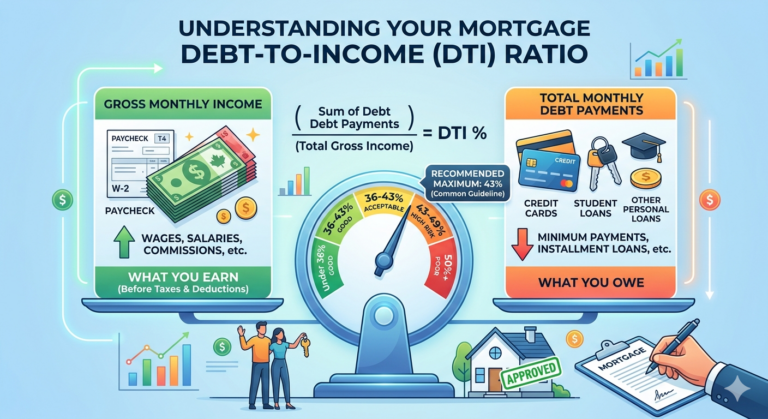
Even with a bankruptcy in your past, lenders will meticulously evaluate your debt-to-income (DTI) ratio. This ratio compares your total monthly debt payments to your gross monthly income. Most lenders prefer a DTI ratio below certain thresholds, typically around 43-45% for conventional loans, though FHA and VA loans can be more flexible, sometimes allowing up to 50% or even higher in certain circumstances if other compensating factors exist. You can calculate your potential DTI with our free [DTI calculator](/dti-calculator-2025/).
#### Credit Score
While bankruptcy significantly impacts your credit score, lenders will look at how your score has recovered since the bankruptcy filing and discharge. While government-backed loans have lower minimum credit score requirements (e.g., FHA allows scores as low as 580 for 3.5% down, or 500 with 10% down), higher scores always lead to better interest rates and more favorable loan terms. Conventional loans typically require a minimum credit score of 620 or higher. You can use our [loan eligibility checker](/loan-eligibility-checker-tool-2025/) to get an idea of where you stand.
#### Down Payment
The size of your down payment can also influence your eligibility. While VA and USDA loans offer 0% down payment options, and FHA allows for a low 3.5% down payment, having a larger down payment (e.g., 5-10% or more) can signal greater financial stability to lenders and potentially offset other risk factors associated with a bankruptcy.
Lenders and Loan Programs That Accommodate Chapter 13 Bankruptcy
While not every lender offers the same flexibility for borrowers with a Chapter 13 history, certain loan programs are specifically designed to help. Focusing on these government-backed options will provide the most viable path to homeownership.
Government-Backed Loans: Your Best Path Forward
These loan programs are insured or guaranteed by the U.S. government, which reduces the risk for lenders and makes them more willing to approve applicants with less-than-perfect credit histories, including those with past bankruptcies.
#### FHA Loans
FHA (Federal Housing Administration) loans are often the most accessible option for borrowers after Chapter 13 bankruptcy. They feature:
- Low Down Payments: As little as 3.5% down for borrowers with a credit score of 580 or higher. If your score is between 500-579, a 10% down payment is typically required.
- Flexible Credit Requirements: FHA guidelines are generally more lenient than conventional loans regarding credit scores after adverse events like bankruptcy.
- Reduced Waiting Periods: As mentioned, just 12 months post-discharge or 12 months of on-time payments while still in the plan (with court approval) can make you eligible.
- FHA Mortgage Insurance Premium (MIP): FHA loans require both an upfront and annual mortgage insurance premium, which adds to the total cost but enables lower down payments and more flexible qualifications.
Learn more about these options in our comprehensive [FHA Loans Guide](/who-are-the-best-fha-mortgage-lenders-for-low-down-pay/).
#### VA Loans
For eligible veterans, active-duty service members, and surviving spouses, VA loans are an excellent option due to their significant benefits:
- 0% Down Payment: One of the most attractive features, allowing qualified borrowers to finance 100% of the home’s purchase price.
- No Private Mortgage Insurance (PMI): Unlike FHA loans or conventional loans with low down payments, VA loans do not require PMI, which can lead to substantial monthly savings.
- Flexible Credit Standards: While the VA doesn’t set a minimum credit score, most lenders will look for a score around 620-640. They are often more forgiving of past credit issues, including bankruptcy, once the waiting period is met.
- Funding Fee: VA loans have a funding fee, which can be financed into the loan amount, though some veterans with service-connected disabilities may be exempt.
- Reduced Waiting Periods: Similar to FHA, a 12-month waiting period from discharge or 12 months into the repayment plan (with court approval) applies.
#### USDA Loans
USDA loans are designed to help low-to-moderate-income individuals purchase homes in eligible rural areas. They offer:
- 0% Down Payment: A major benefit for qualifying properties and borrowers.
- Income Limits: Eligibility is subject to specific income limits based on family size and location.
- Property Location Restrictions: The home must be located in an area designated as rural by the USDA.
- Reduced Waiting Periods: Typically, a 12-month waiting period from Chapter 13 discharge, or 12 months of proven on-time payments within a plan with trustee and court approval.
Conventional Loans: A Longer Road
While possible, conventional loans (those not backed by the government) have more stringent requirements after a Chapter 13 bankruptcy.
- Longer Waiting Periods: As noted, 2 years from discharge or 4 years from dismissal. This is a significant difference compared to government-backed options.
- Higher Credit Score Expectations: Lenders typically require a minimum credit score of 620, but scores above 680 or 700 will yield better rates.
- Higher Down Payment: While conventional loans can offer as little as 3% down for first-time buyers, a larger down payment (e.g., 5-20%) may be beneficial after bankruptcy to offset perceived risk.
- Private Mortgage Insurance (PMI): If you put less than 20% down, conventional loans require PMI, which is typically removable once you reach 20% equity.
Specific Lender Types to Consider
While MortgageTune.com does not endorse specific lenders, understanding the types of lenders that might be more accommodating can help your search:
- Direct Mortgage Lenders: These institutions handle the entire loan process in-house, from application to funding. They can sometimes have more streamlined processes and direct control over their underwriting guidelines, potentially offering flexibility if you meet government program requirements.
- Mortgage Brokers: A mortgage broker works with multiple lenders. They can be invaluable for borrowers with unique situations like a Chapter 13 bankruptcy, as they can shop your profile to several lenders to find one that specializes in or is more favorable to your specific circumstances.
- Credit Unions: Often known for their community focus and sometimes more flexible underwriting, credit unions might be a good place to explore, especially if you have an existing relationship with one.
- Private Mortgage Lenders: While less common for standard mortgages, some private mortgage lenders offer non-QM (non-qualified mortgage) loans. These often come with higher interest rates and fees but might have more flexible underwriting for borrowers who don’t fit traditional criteria. However, we generally recommend exhausting government-backed and conventional options first. Learn more about them in our guide to [Private Mortgage Lenders](/private-mortgage-lenders-a-smart-alternative-to-traditional-banks/).
When you’re ready to compare options, our [rate comparison tool](/mortgage-rate-comparison-tool-2025/) can help you find potential lenders.
Real-World Qualification Math: What Lenders Look For
Beyond the bankruptcy status, lenders assess your overall financial health using several metrics. Understanding these helps you prepare and present the strongest application possible.
Credit Score Targets (2026)
Your FICO credit score remains a critical indicator of your creditworthiness. While a Chapter 13 bankruptcy will initially drop your score, lenders want to see positive credit rebuilding over time.
- FHA: Generally 580 for a 3.5% down payment. Some lenders may go as low as 500 with a 10% down payment.
- VA: No official minimum, but most lenders look for 620-640 or higher.
- USDA: Often requires a minimum of 640.
- Conventional: Typically 620 or higher, with better rates for 680+.
Remember, these are minimums. A higher score always gives you better loan terms and more lender options.
Debt-to-Income (DTI) Ratio
Your DTI is a key indicator of your ability to manage monthly payments. It’s calculated by dividing your total monthly debt payments (including the proposed new mortgage payment) by your gross monthly income.
- FHA: Can be flexible, sometimes allowing DTI ratios up to 50% or even 55% with strong compensating factors (like significant cash reserves or a very low housing expense ratio).
- VA: Focuses heavily on residual income (income left after all major expenses), but DTI is still considered. Often allows higher DTI than conventional.
- USDA: Typically looks for a DTI around 41-45%.
- Conventional: Generally prefers DTI below 43-45%.
Lowering your DTI by paying down existing debts before applying for a mortgage can significantly improve your chances of approval. Use our [DTI Calculator](/dti-calculator-2025/) to estimate yours.
Income Stability and Employment History
Lenders require a stable and verifiable income. You’ll typically need to show at least two years of consistent employment in the same line of work. For self-employed borrowers, two years of self-employment tax returns are usually required. The stability of your income demonstrates your long-term ability to repay the mortgage.
Cash Reserves
Having cash reserves – money left over after your down payment and closing costs – is a significant compensating factor. Lenders see this as a cushion against unexpected financial challenges. While not always a strict requirement for government loans, having two to six months of mortgage payments in savings can strengthen your application.
Property Requirements
Ensure the property you intend to purchase meets the specific requirements of the loan program you’re pursuing. For instance, USDA loans are strictly for eligible rural areas, and all government-backed loans have minimum property standards for safety and habitability.

Navigating the Application Process with Chapter 13 History
The mortgage application process after a Chapter 13 bankruptcy requires thorough preparation and transparency. Here’s how to approach it.
1. Gather All Relevant Documents
Before you even speak to a lender, have your bankruptcy documents organized. This includes:
- Your bankruptcy petition and schedules.
- The Chapter 13 repayment plan.
- The discharge order (if applicable).
- Proof of on-time payments to the trustee (if still in the plan).
- Written permission from the bankruptcy court and trustee (if applying while still in the plan).
You’ll also need standard mortgage application documents like W-2s, pay stubs, tax returns, and bank statements.
2. Get Pre-Approved
A mortgage pre-approval is a crucial step. It tells you how much you can realistically borrow, helping you set a budget and focus your home search. For pre-approval, lenders will review your credit report, income, and assets, including your bankruptcy history. This is also where you can confirm if you’ve met the necessary waiting periods. Our [Loan Eligibility Checker](/loan-eligibility-checker-tool-2025/) can give you an early indication of your standing.
3. Be Transparent and Honest
When discussing your financial history with a potential lender, be completely transparent about your Chapter 13 bankruptcy. Hiding information or being vague will only complicate the process and can lead to a denial. Explain the circumstances that led to the bankruptcy and, more importantly, what you’ve done to rebuild your finances since.
4. Work on Improving Your Credit Score
Even if you meet the minimums, a higher credit score can secure better interest rates, saving you tens of thousands of dollars over the life of the loan. Continue to make all payments on time, keep credit card balances low, and avoid opening new credit accounts while preparing for a mortgage.
5. Shop Around for Lenders
Not all lenders have the same experience or appetite for working with borrowers who have a bankruptcy history. Some may specialize in government-backed loans and be more familiar with the specific guidelines for FHA, VA, and USDA loans after Chapter 13.
It’s highly recommended to compare offers from at least three to five different lenders. This can reveal significant differences in interest rates, fees, and overall loan terms. Use our [Rate Comparison Tool](/mortgage-rate-comparison-tool-2025/) to facilitate this process. Remember that the “fastest lenders” might not always be the most accommodating for unique situations like yours, so focus on expertise and favorable terms.
Common Pitfalls and How to Avoid Them
Even with the possibility of securing a mortgage, certain missteps can derail your efforts. Being aware of these common pitfalls can help you navigate the process more smoothly.
- Applying Too Soon: The most common mistake is applying before meeting the minimum waiting periods. Review the specific requirements for FHA, VA, USDA, and conventional loans carefully. An early application will almost certainly result in a denial, which can be discouraging.
- Not Obtaining Court or Trustee Approval: If you are still in an active Chapter 13 repayment plan, failing to secure written approval from your bankruptcy court and trustee before applying for a new mortgage is a guaranteed denial. This step is non-negotiable.
- Poor Payment History After Bankruptcy: Lenders will scrutinize your credit report not just for the bankruptcy but for your payment behavior since. Any late payments on credit cards, car loans, or other debts after your bankruptcy discharge or during your repayment plan will signal continued financial instability.
- Taking on New Debt: Opening new credit lines, making large purchases on credit, or co-signing for loans for others before or during your mortgage application can negatively impact your DTI ratio and credit score, making you less attractive to lenders.
- Lack of Transparency: As mentioned, trying to downplay or hide your bankruptcy history will damage trust with your lender and complicate the process. Be upfront and honest from the very beginning.
- Not Saving Enough for Down Payment and Reserves: While low-down-payment options exist, having additional funds for closing costs, prepaid expenses (like property taxes and insurance), and emergency reserves makes your application much stronger and demonstrates financial preparedness.
- Focusing Only on Major Banks: While large banks offer mortgages, smaller local banks, credit unions, and mortgage brokers often have more specialized knowledge for unique situations and may be more willing to work with borrowers who have a Chapter 13 history. Explore all your options.
Who Should NOT Pursue a Mortgage Right After Chapter 13?
While getting a mortgage after Chapter 13 is possible, it’s not the right move for everyone, especially if certain conditions haven’t been met or if financial stability is still tenuous.
You should likely not pursue a mortgage application right now if:
- You Haven’t Met the Waiting Periods: If you haven’t passed the minimum 12-month (for FHA/VA/USDA) or 24-month (for conventional) waiting period from your Chapter 13 discharge, or 12 months of on-time payments if still in the plan, applying will be premature.
- You Have a Poor Payment History Since Bankruptcy: If you’ve struggled with making payments on time for other debts since your bankruptcy, lenders will see this as a red flag, indicating you haven’t fully rebuilt responsible financial habits.
- Your Income is Unstable or Insufficient: If you’ve recently changed jobs, have inconsistent income, or your current income doesn’t comfortably support a new mortgage payment in addition to existing debts (resulting in a high DTI), it’s wise to wait until your income is more stable. Use our [Affordability Calculator](/affordability-calculator-2025/) to assess your comfort level.
- You Haven’t Rebuilt Your Credit Score: While lower scores are accepted for FHA, a score below 580 (for FHA with minimum down) or 620 (for VA/Conventional) will severely limit your options. Focus on credit repair first.
- You Don’t Have Sufficient Down Payment or Reserves: While 0% down loans exist (VA, USDA), having some funds for closing costs and an emergency fund is crucial for long-term homeownership stability. If you’re stretching to make the minimum, it might be too soon.
- You’re Still Financially Fragile: If the bankruptcy stemmed from underlying financial habits that haven’t been fully addressed, or if your budget is extremely tight, adding the significant responsibility of a mortgage might lead to further financial strain.
For these individuals, focusing on continued credit rebuilding, debt reduction, and savings before applying for a mortgage will lead to a more successful and less stressful homeownership journey.
Rebuilding Your Financial Foundation for Future Homeownership
The period after Chapter 13 bankruptcy presents a crucial opportunity to rebuild your financial life and demonstrate your readiness for a mortgage. Here are key strategies:
- Credit Improvement: Consistently make all payments on time. If you don’t have many active credit lines, consider a secured credit card to build positive payment history. Keep your credit utilization low (ideally below 30% of your credit limits). Regularly check your credit report for errors and dispute any inaccuracies.
- Save for a Down Payment and Closing Costs: The more you can save, the stronger your application will be, and the less you’ll need to finance. Aim for a down payment (even if minimal) and additional funds for closing costs, which can range from 2-5% of the loan amount.
- Build Cash Reserves: Accumulate an emergency fund of at least three to six months’ worth of living expenses. This provides a financial cushion and is viewed very positively by lenders.
- Reduce Existing Debt: Actively work to pay down credit card balances and other consumer debts. This will improve your credit utilization and, importantly, lower your debt-to-income ratio, making you a more attractive borrower.
- Create and Stick to a Budget: A detailed budget helps you understand where your money goes, identify areas for savings, and ensure you can comfortably afford all homeownership expenses.
- Maintain Stable Employment: Lenders prefer to see a consistent work history, typically two years in the same line of work. Avoid job hopping or significant career changes right before applying for a mortgage.
By proactively taking these steps, you not only improve your chances of mortgage approval but also establish a stronger, more resilient financial foundation for long-term homeownership.
Taking Your Next Steps Towards Homeownership
Obtaining a mortgage after a Chapter 13 bankruptcy is a testament to financial perseverance. While it requires patience, careful planning, and meeting specific criteria, the pathways provided by government-backed loan programs like FHA, VA, and USDA make it a very achievable goal. By understanding the waiting periods, diligently managing your finances, and working with knowledgeable lenders, you can successfully navigate the process.
Remember, MortgageTune.com is here to provide educational resources and tools to assist you. Explore our various calculators and guides, including our [mortgage calculator](/mortgage-calculator-2025/), [refinance calculator](/refinance-calculator-2025/), and our full suite of [All Tools](/mortgage-tools/) to help you plan your journey. Your dream of homeownership is within reach with the right information and approach.
Disclaimer: MortgageTune.com provides educational content and tools for informational purposes only. We are not licensed financial advisors, mortgage brokers, or lenders. The information presented here is general in nature and not a substitute for professional, personalized advice. Always consult with a qualified mortgage professional, financial advisor, or legal expert to discuss your specific situation and needs. Mortgage rates, terms, and qualification criteria are subject to change and depend on individual circumstances.
This article is for informational purposes only and does not constitute financial or legal advice. Mortgage rates, loan limits, and program requirements change frequently. Always consult a licensed mortgage professional and verify current rates directly with lenders before making any financial decisions.